

Every year around this time, we need to start thinking about preparing things around the property for winter, and that includes the chickens and their coop. Chickens do just fine in the winter, and even though we’ve had chickens for more than ten years, I still worry about them on the coldest of days. Making sure that their housing and nutritional needs are met can give me peace of mind.
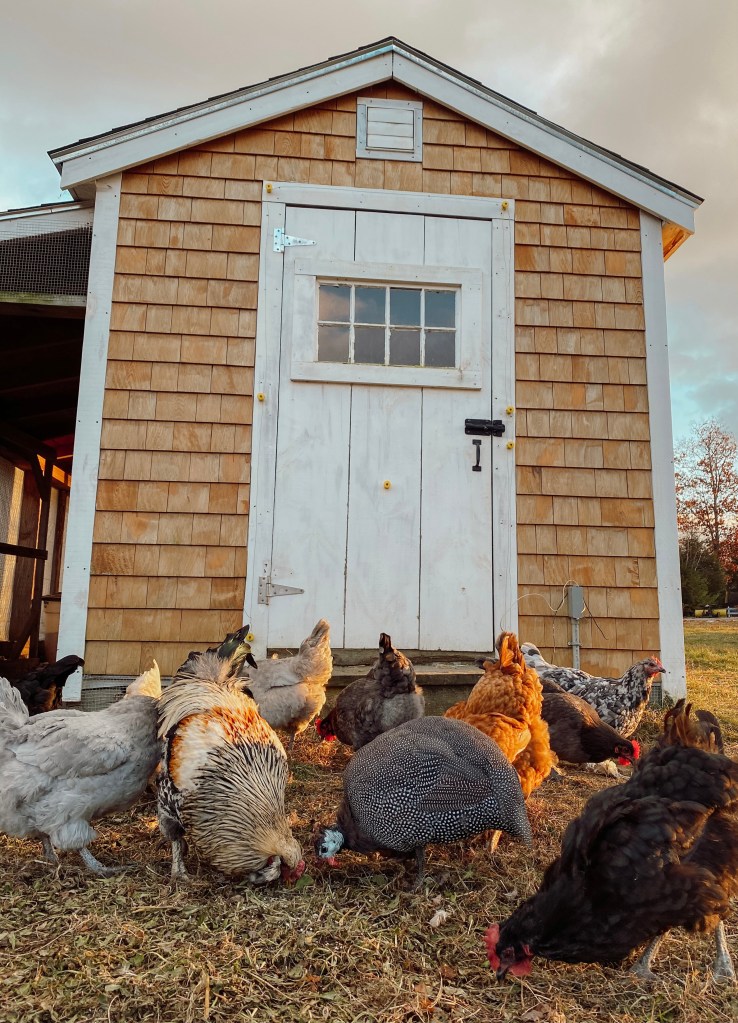
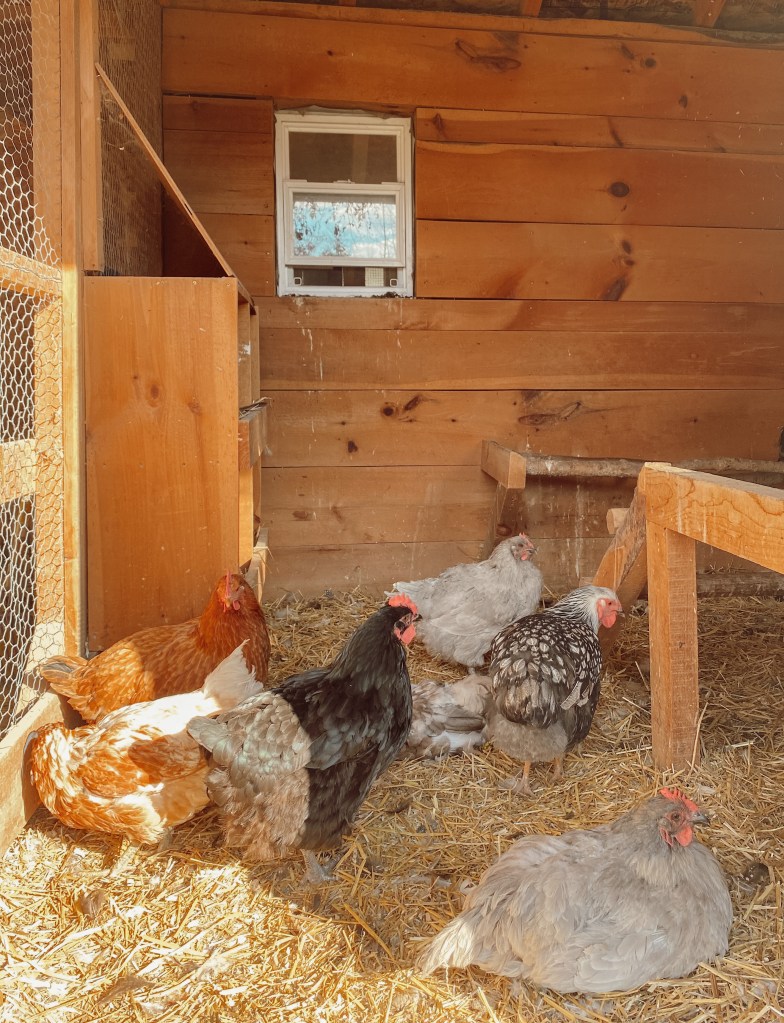
We start preparing their coop for winter by giving it a good clean out on the inside – cleaning out the old bedding from the floor and the nest boxes, vacuuming the dust, and laying out fresh bedding. Not letting the dust get too built up in the coop is important, especially in the winter when they spend more time inside, as chickens are quite susceptible to respiratory diseases. Keeping the air clean and dry on the inside is more important than warmth in the winter.
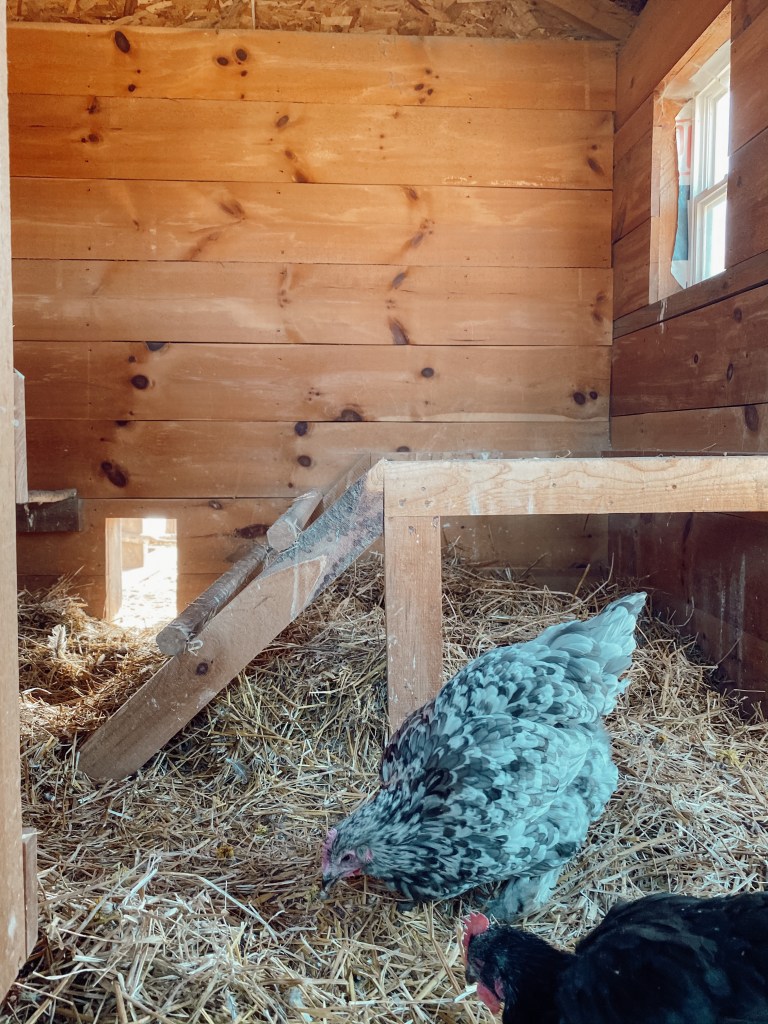
This year, we’re using straw as bedding. We’ve always used pine shavings, but we’re going to give straw a try this winter now that we have straw on hand for the pigs. Straw breaks down faster than pine shavings, which means it will break down for compost quicker once we take it out in the spring. It has also been breaking down in the coop faster already, prompting me to turn the bedding over and add a fresh layer quite often. We’ve used the deep litter method every winter, but I’m hoping that the loose straw will continue to be easier and more loose to turn over once we’re consistently below freezing.
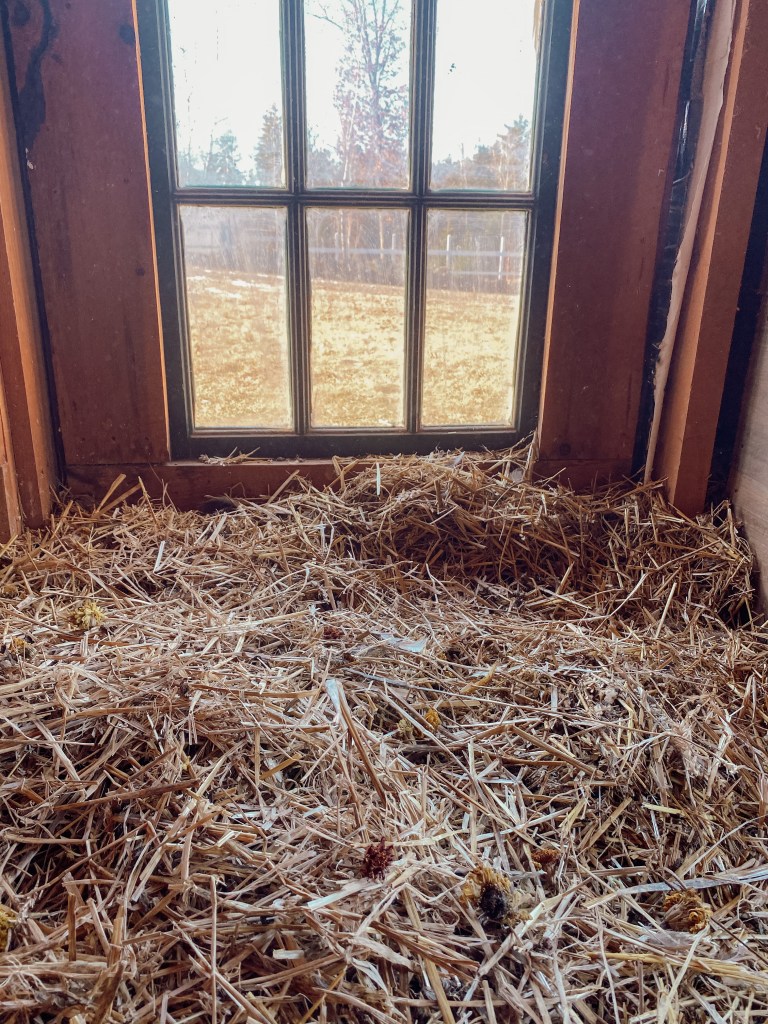
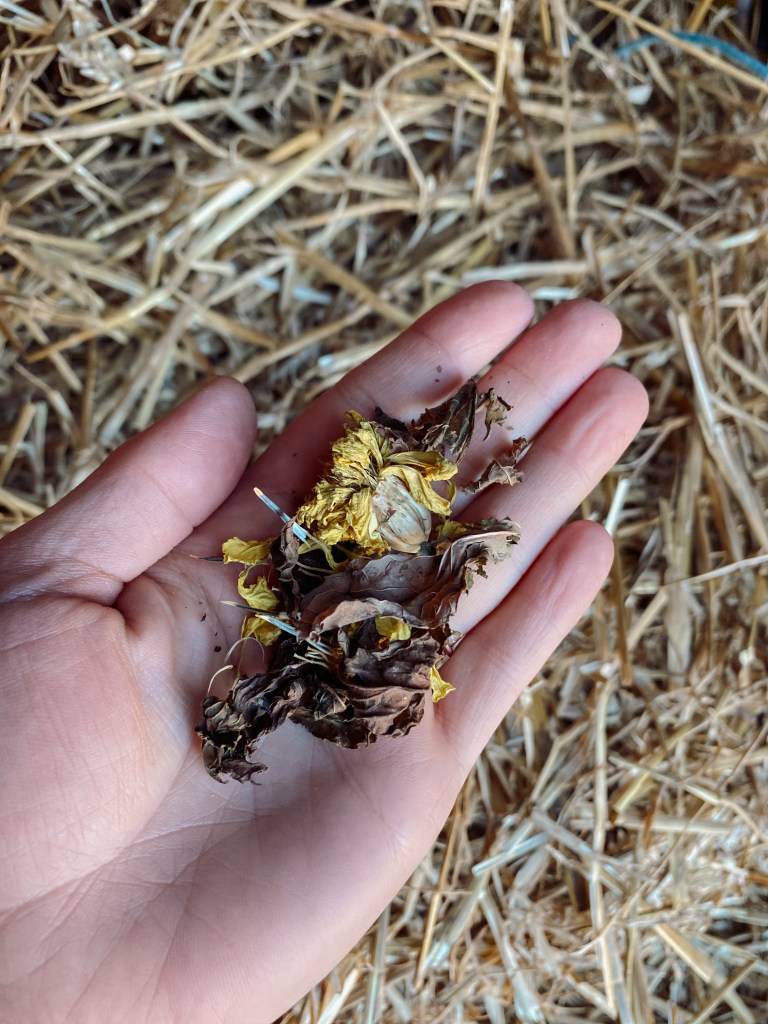
Under the first layer of bedding, I’ll add a thin layer of First Saturday Lime (found here: https://amzn.to/3sZe3NU). I’ll scrape down to the bottom of the coop floor once in a while and sprinkle a bit more throughout the winter as needed. Every two to three days I’ll loosen and turn the bedding, add more straw on top, and a handful of dried mint and marigold saved from the garden. They both provide health benefits for the chickens if consumed, and both add a fresh smell to the coop. The mint is also a great natural insect deterrent. I’ll also throw some seeds and treats down for the chickens to encourage them to stir up their own bedding and keep them busy.
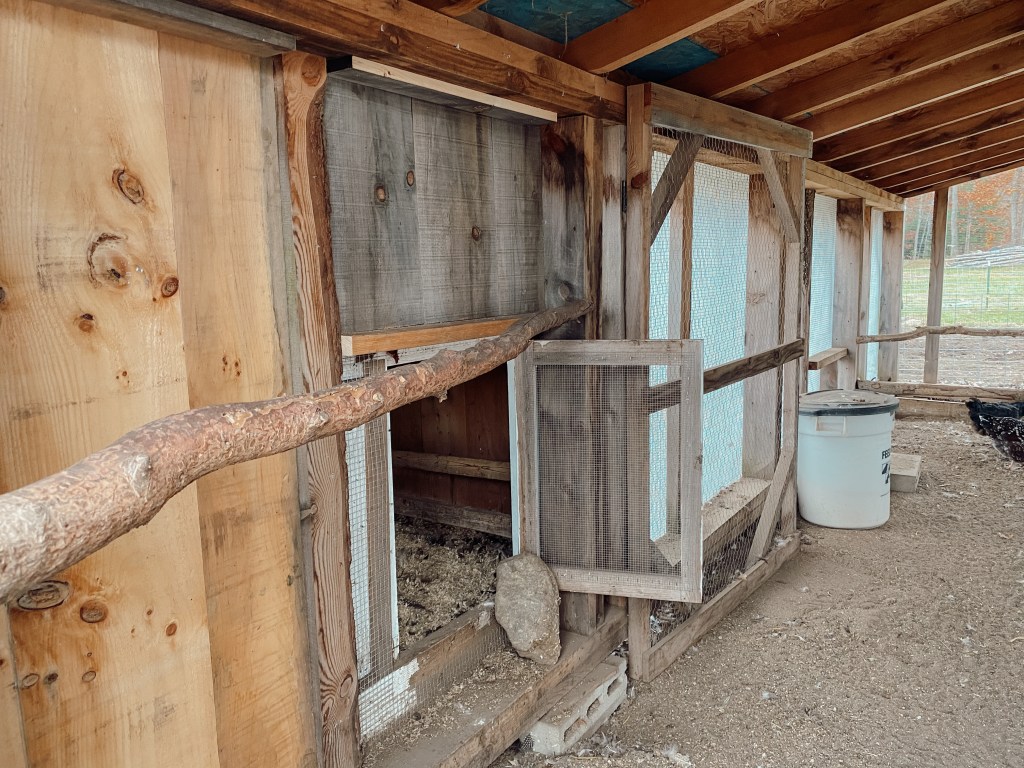
Keeping the coop clean and dry is one of the best things you can do for your chickens in the winter. Making sure their coop is not drafty will help them stay warm at night, but be sure that at the top of the coop there is plenty of ventilation. In our coop, we even have a fan built in. We use this more often in the summer when it gets hot and stuffy inside, but is also a great option for winter to make sure the air is circulating properly.
On the topic of temperature, it’s also important to not provide supplemental heat in your coop. We’ve had chickens for a decade in New Hampshire and our birds have been just fine. We had record breaking cold temperatures last year, and only one chicken that suffered from some frostbite on his large comb. I read a university website that actually suggested providing supplemental heat once temperatures were under 35 degrees. This is absolutely not needed! Not only will your birds be more acclimated if you don’t heat the inside of the coop, but heat sources can also be a fire hazard.
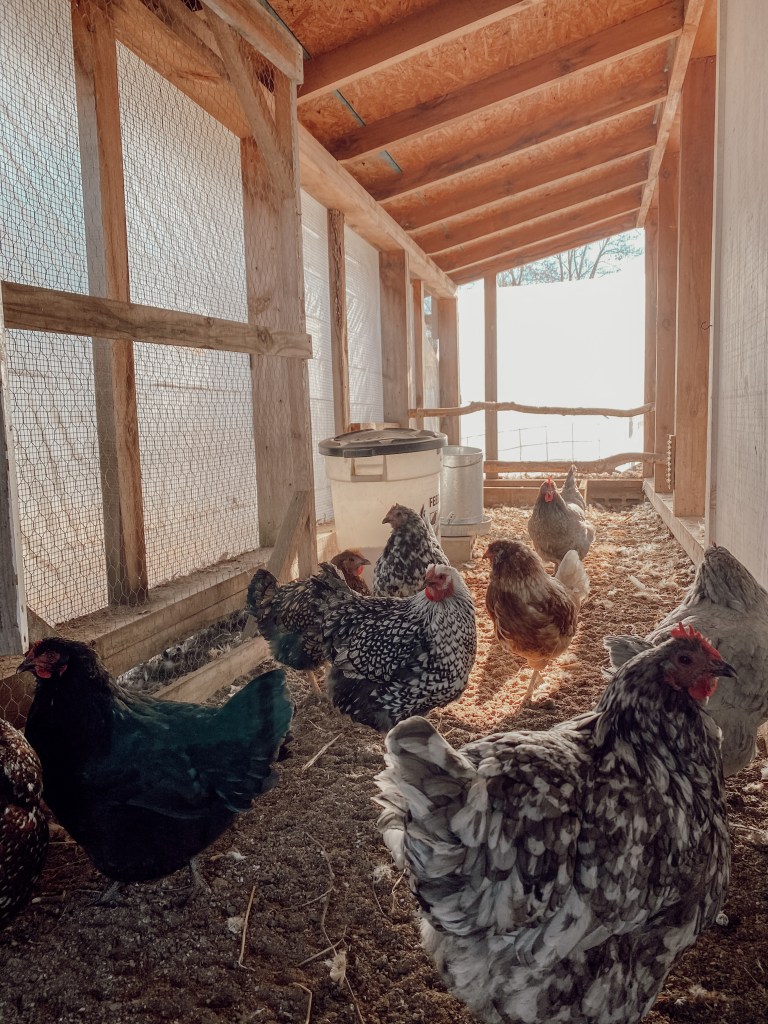
I’m lucky to have a husband and father-in-law who are handy with electrical projects (and everything else), as they also added a light inside the coop, and an outlet in the run for the waterer. We use the electric heated water base in the winter. I prefer this style over the heated waterer, so that we can use the same waterers we use in the summer, and have more than one so we can keep one full in the coop run, and another at the house to fill up for the next day so its just less walking back and forth. This way we also have an extra in case one cracks.
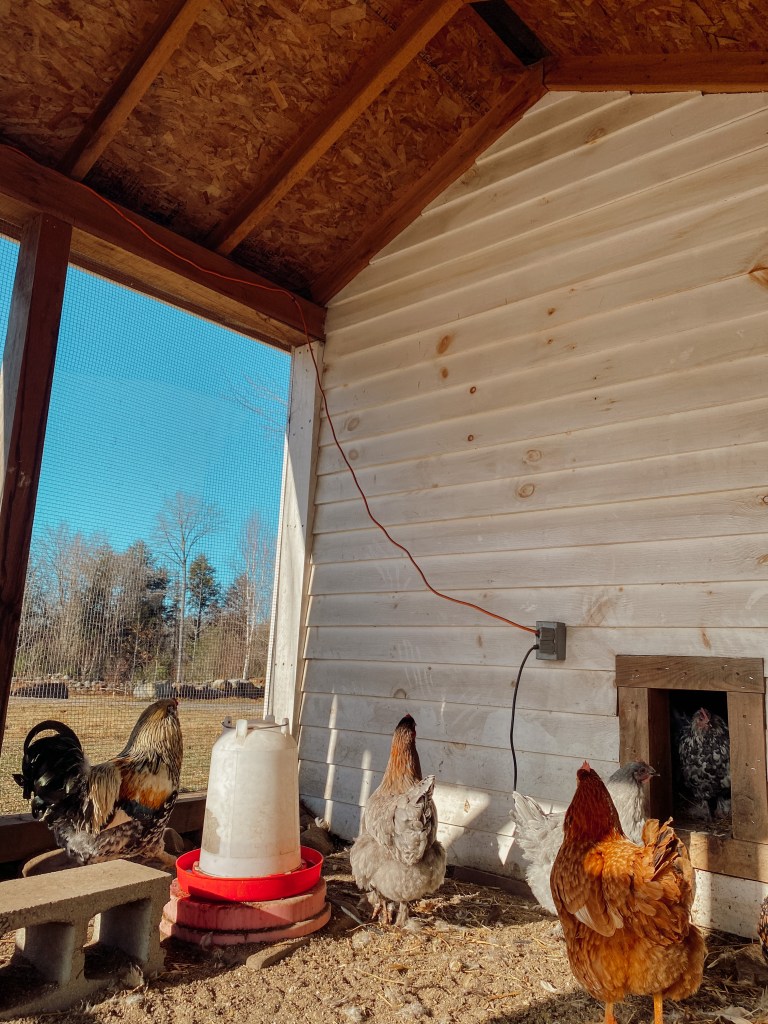
You may also want to have electrolytes and apple cider vinegar on hand in the winter (and really, all year round), if your chickens are showing signs of malnutrition due to less foraging, molting, or illness. There are also a lot of other factors working against your chickens in the winter, like less sunlight, less fresh air, and close proximity that can lead to illness. Regarding electrolytes, there are also several recipes you can find online for making your own with salt and sugar. Regarding apple cider vinegar, there are many claims that adding this to your chickens’ water can cure this and that, or prevent a number of things, and other websites that claim it does nothing. I think its somewhere in the middle – so do your research, don’t overdo it, and always use organic unfiltered ACV.
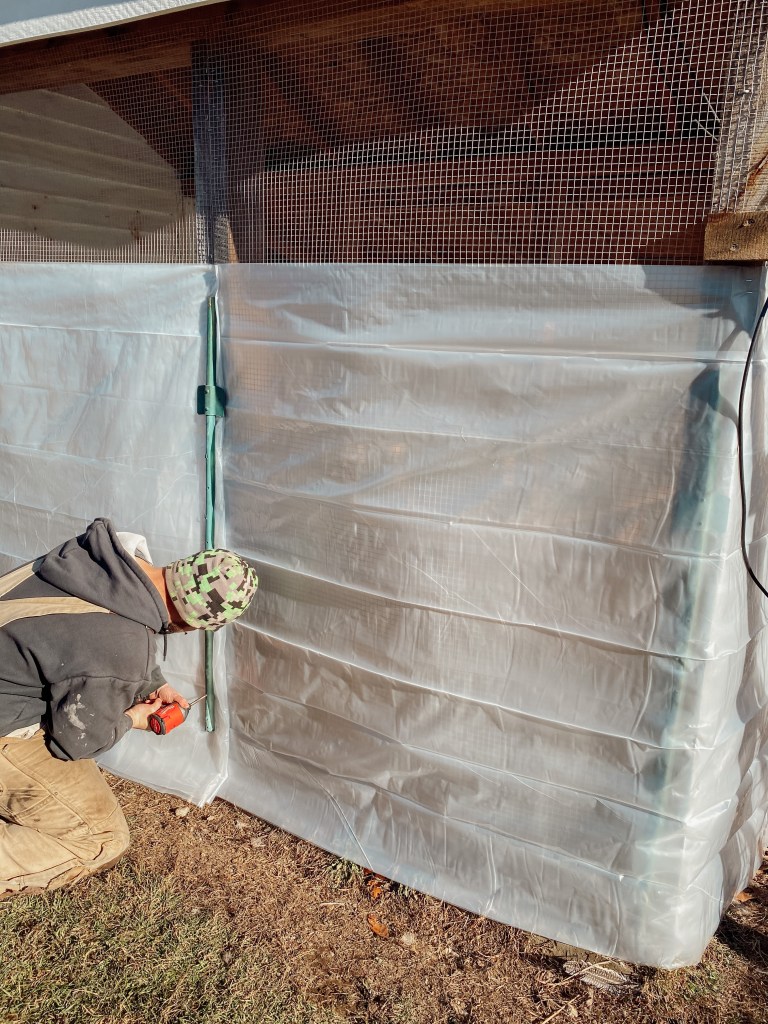
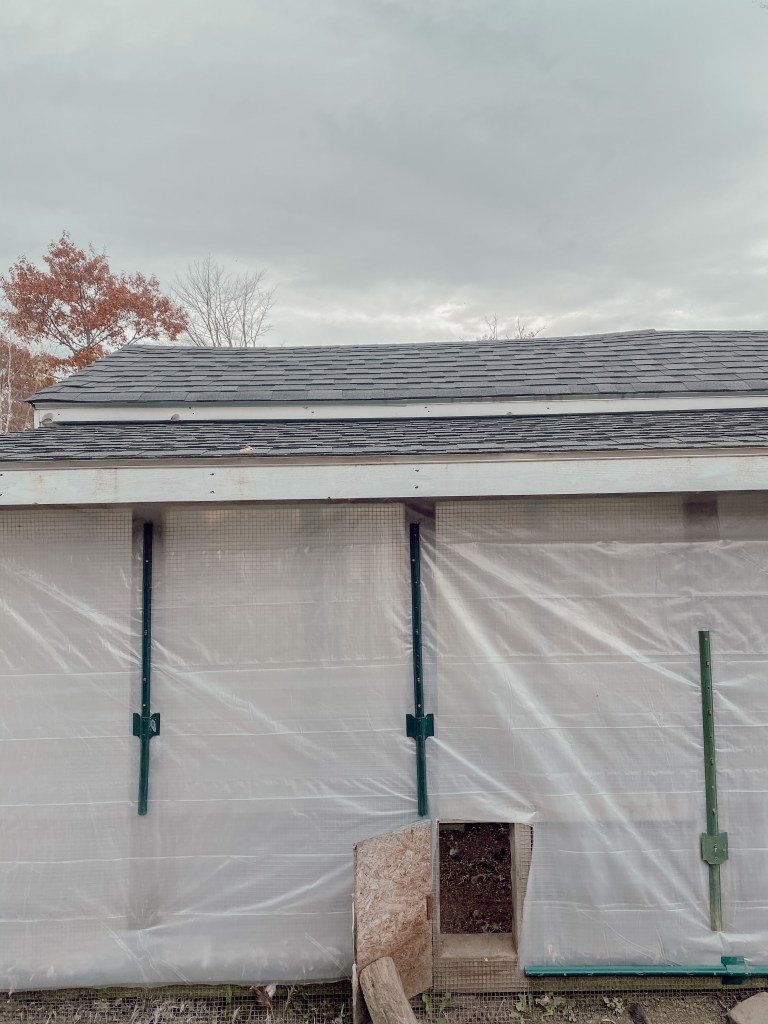
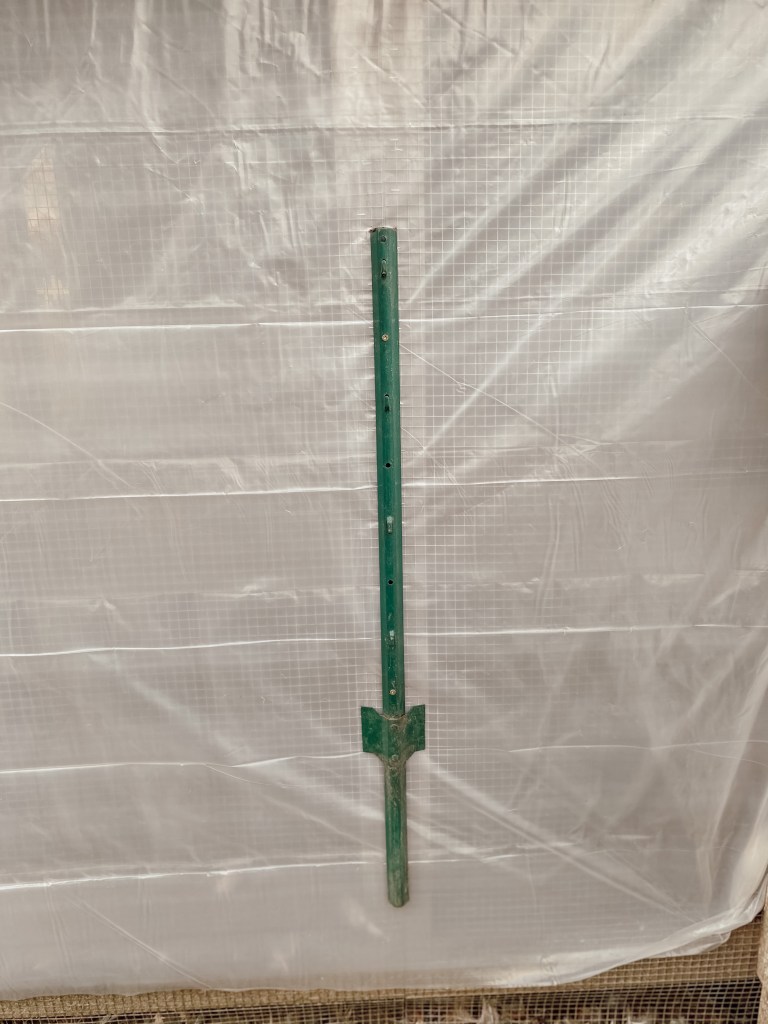
Before we get snow (and we can get a lot of snow here) we make sure to cover most of the run with plastic to keep the snow out. On the north side, where a lot of the wind and snow blow from, we cover the whole wall. On the other walls, we’ll cover the bottom half or two thirds. It will keep most of the snow from blowing in, but will still allow for plenty of air flow. The plastic not only keeps us from having to shovel snow out of the run, but can also help the run feel a few degrees warmer than the outside. Over the years we’ve also learned to use T-posts to keep the plastic attached to the coop. Using just staples, the plastic tends to rip off (quite regularly) when the wind hits. T-posts, which we already have an abundance of, already have holes where you can screw right through to the wood supports on the coop. This keeps the plastic attached all winter long.
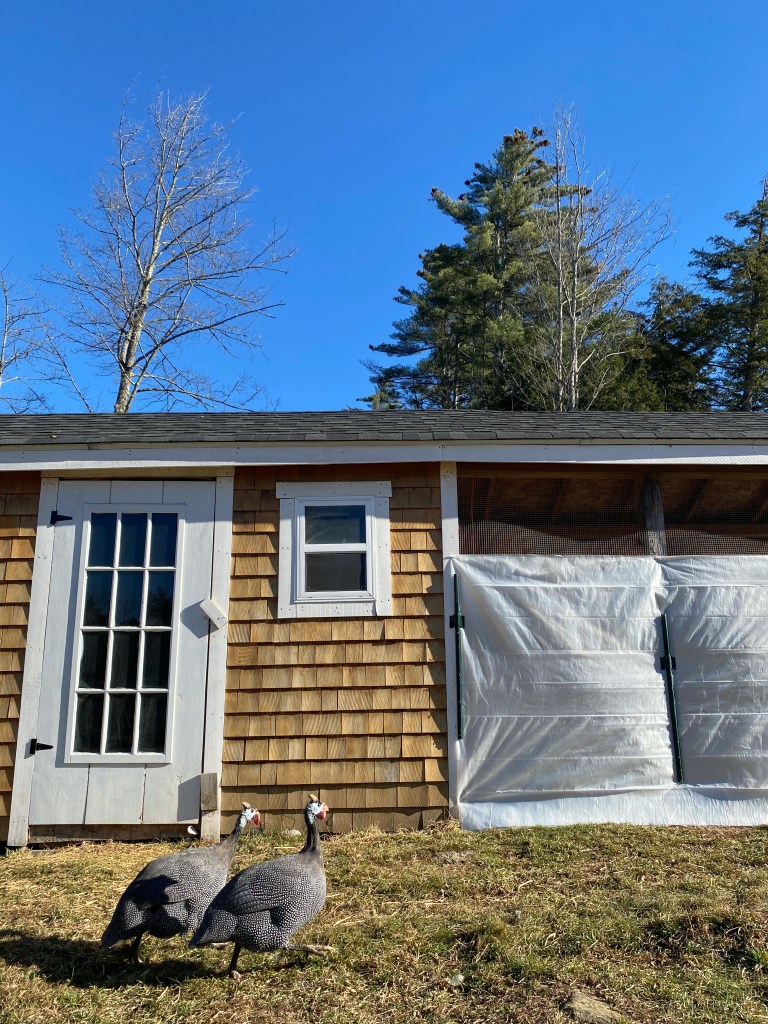
In the back corner where we enter the run, we finally closed it in with wood. Our guineas like to roost out here year-round. Even when the snow is blowing, they stay outside. This corner also gets less sunlight, so after a heavy rain it takes a while to dry out. We’re hoping that adding the siding will keep it drier, and help the guinea fowl stay warmer and drier this winter too.
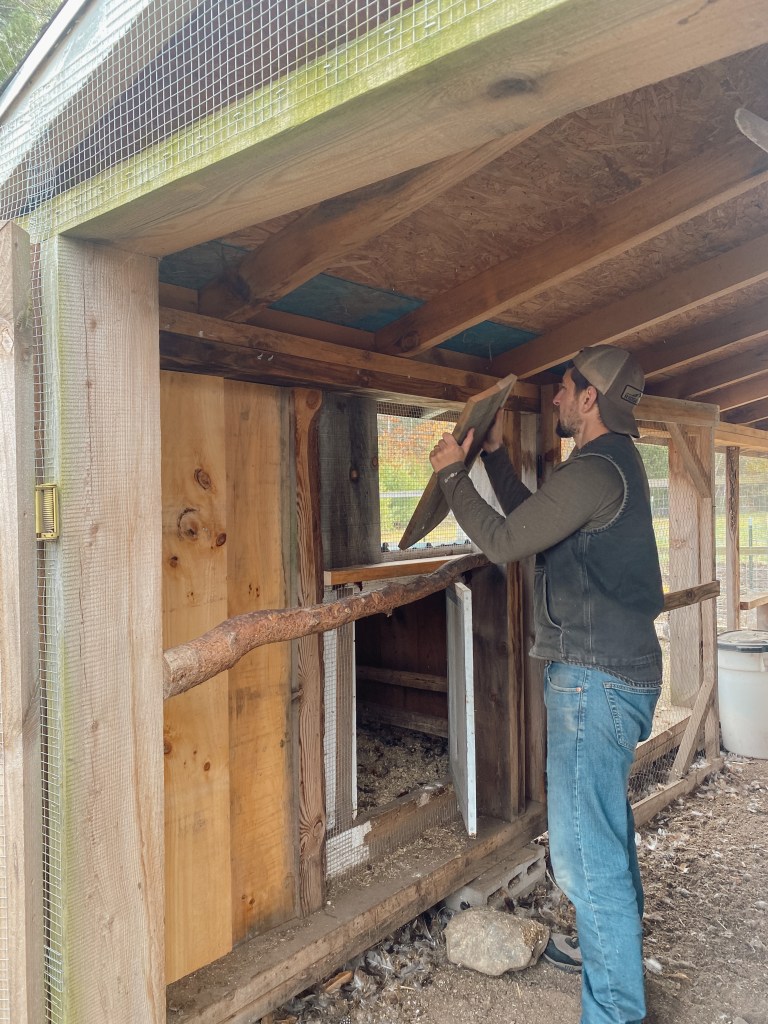
There are a lot of quick and simple steps that can help the chickens have an easier time getting through winter. Less snow in the run, a drier coop, and fresh unfrozen water will also give us peace of mind that the birds are just fine on those cold days when we would rather be inside. I hope what I have shared has either given you an idea or two in improving your winter coop, or convinced you that maybe keeping chickens year-round doesn’t have to be stressful.
 blackberryhillhomestead.com
One response to “The Winter Coop”
[…] we’ve also figured out some tricks to keep them happy during the winter. Check out my post here about preparing the coop for winter. Adding plastic to the run, a heater for the waterer, deep […]
LikeLike