

Having chickens inevitably leads to having other animals on the homestead, especially other birds. We’ve raised chickens for meat, turkeys for meat, and we even had ducks for a short period of time. About three years ago, we added guinea fowl to our flock.

We wanted to try out adding guineas for a few reasons, and we’ve enjoyed having them around. Unfortunately, we’re down to only two with our flock of chickens so we’ll be looking to add some more, likely this year.
Guineas are appealing for a few reasons:
They’re cold hardy.
They lay eggs that taste like chicken eggs.
They’re “watchdog” birds.
And most importantly – they eat ticks. LOTS of them.
If you’re looking to add diversity to your flock without the mess of a duck, or sass of a goose, then adding guinea fowl to your homestead might be a good fit for you too.
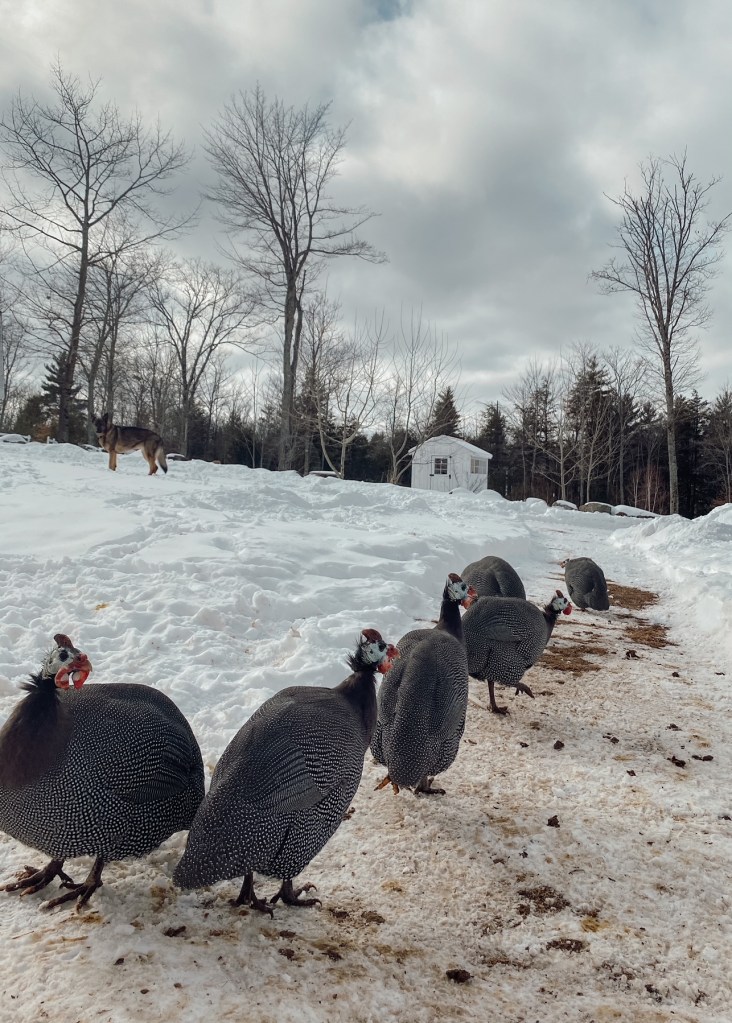
In spring of 2021, we picked up 15 keets (baby guineas) from a local farm. The keets were noticeably more “wild” than chicks. Reaching in to fill and change the food and water or change the bedding, they would quickly huddle in the opposite corner, jumping over each other to get away from us. Moving them from the brooder to the smaller temporary coop outside, it was much more difficult to catch and move them than it is chickens.

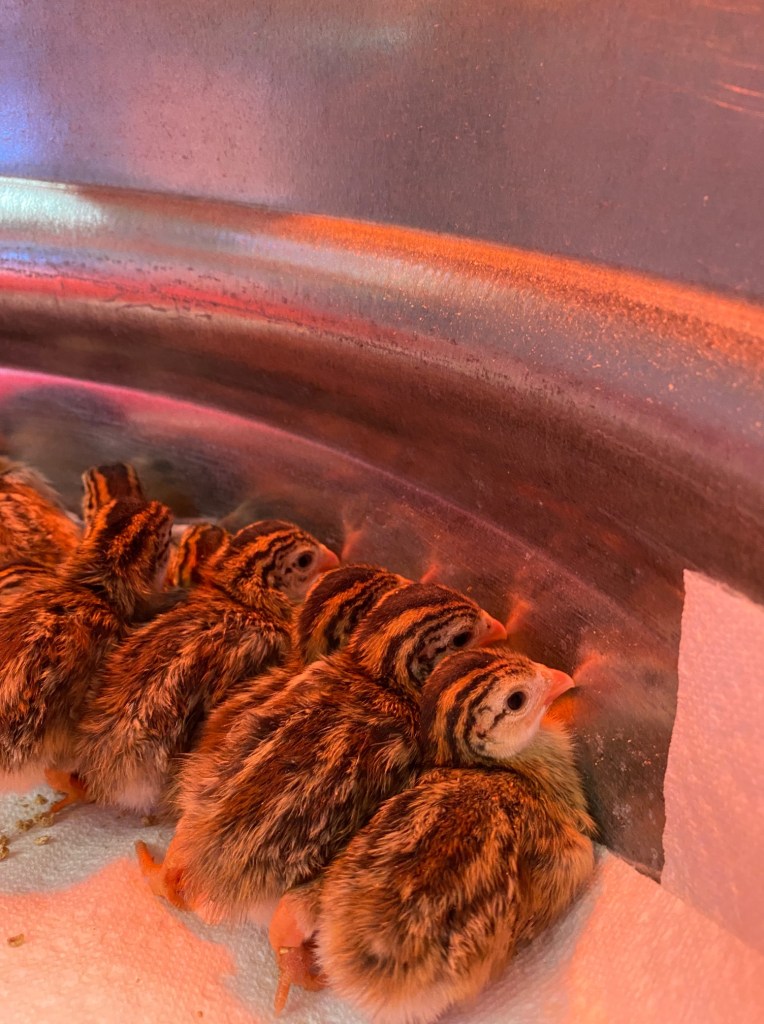
Growing up, the guineas continue to be more wild and less friendly to us than any of the chickens. Not to say that they’re aggressive, because they certainly are not, but they just keep their distance from us a bit more than chickens or turkeys.

They also prefer to sleep out in the run rather than inside the coop. The first year, they also preferred to sleep totally outside (like, not even in the enclosed run), which we often let them do (because, try herding a dozen wild guineas into a coop at dusk…). Unfortunately, we lost nearly half our guinea flock that way.
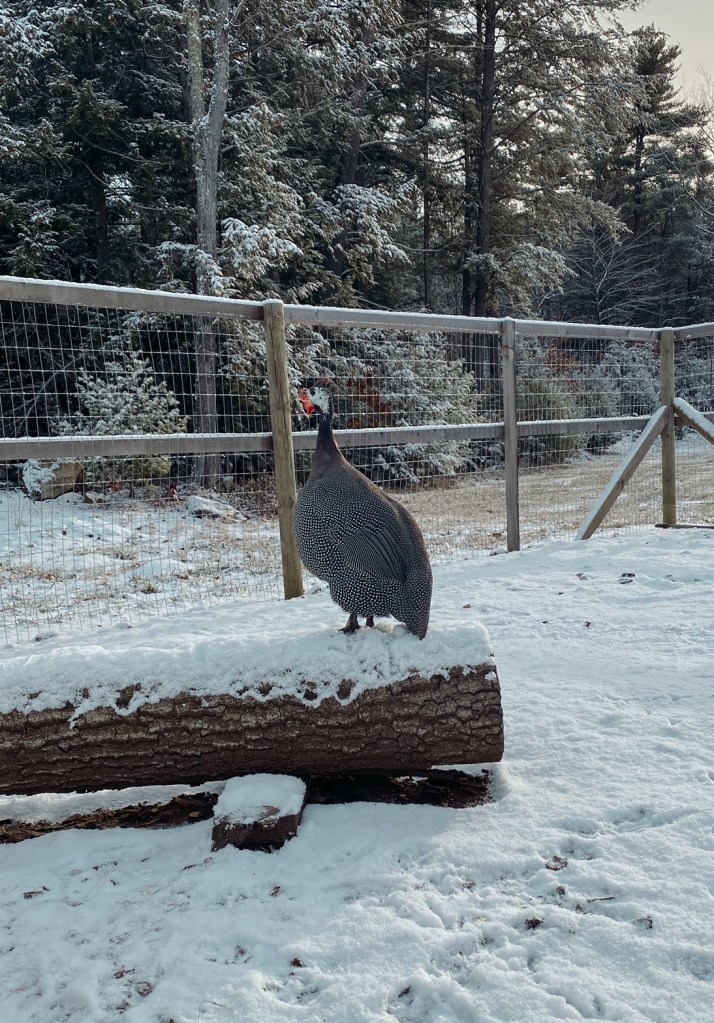
Our guineas do live in the same coop as the chickens, which is convenient. They require the same living environment and eat the same food, so they’re an easy addition to the coop. They’re also cold-hardy, so they live just fine in the winter with the chickens too. In addition to being cold-hardy, they’re just hardy birds all around. They are less susceptible to disease and illness than chickens and we’ve never had a health issue with a guinea.
During the spring and summers here in New Hampshire, we have a lot of ticks. The months of May and June seem to be the worst, and on any given day, we’ll bring a few ticks in the house with us. I feel like they definitely have made a difference in the tick population. Though we do still have ticks, as I don’t think any amount of guineas will get rid of the ticks around here.
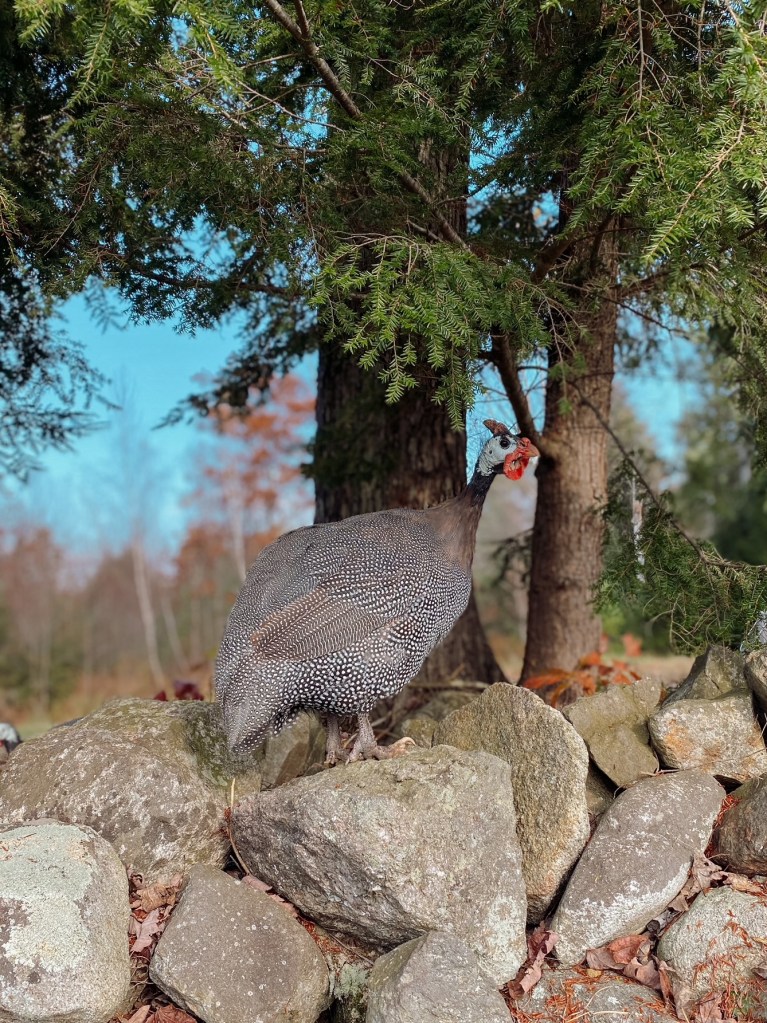
Another benefit of having guineas is they act as “watchdogs” on the property. If they see a hawk, coyote, fox, bobcat, or other predator, they will sound their alarms. They are surprisingly loud. They also like to announce themselves by yelling on the roof of the coop, so their calls signal more than just predators. We don’t mind, as we don’t have any close neighbors, but having guinea fowl would not be a good idea if you live in a neighborhood. But for us, it works and we don’t mind their noise. They have called our attention to the coop because of a predator on more than one occasion, so it’s nice having them around for that reason.

The first year or two that we had the guineas, we got a lot of eggs. They seemed to lay just as often as the chickens. We found their eggs in the nest boxes but also on the ground in the run of the coop. They are also more likely than chickens to hide a clutch of eggs outside the coop when they’re free ranging. For our girls, they seemed to enjoy laying large groups of eggs in the green bean beds.
Their eggs are a bit smaller than chickens, more of an oval shape, and have SUPER hard shells. You have to really whack those things to get them open. However, once cracked they look and taste just like chicken eggs.
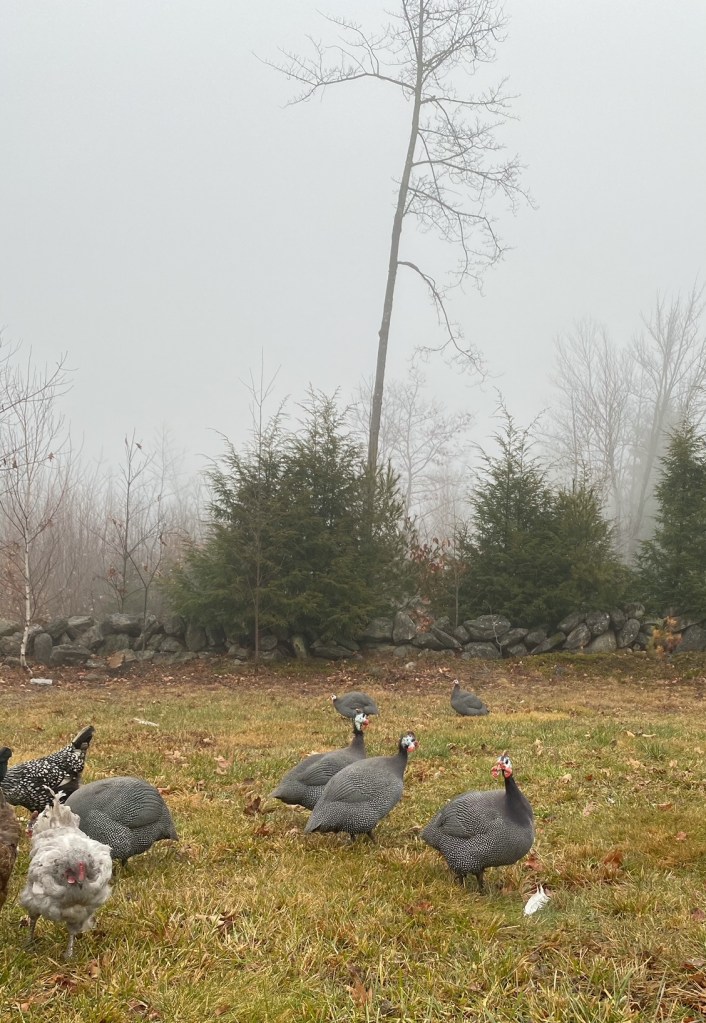
After the second year we didn’t find any more guinea eggs. Either they don’t produce nearly as long as chickens, or we just lost all or most of our females. Gender can only really be determined by their calls, as the males and females look exactly alike, so we were never really sure how many boys and girls we had.

From the fall of 2021 until the summer of 2023, we had 6 guineas. This was a great number in ratio to our chickens. We started with 15, and because of their noise it was just too many. Six was a great amount of guineas to have. Due to a bobcat issue last summer, we have since been down to two. We would very much like to get a few more guineas.
If we raise them with some chicks, I think they would be able to integrate into the flock just fine. I’ve heard of some mixed flocks having issues with the guineas bullying the chickens. We haven’t had that issue, and I think if the guineas have enough room and options for free ranging, they can cohabitate just fine.

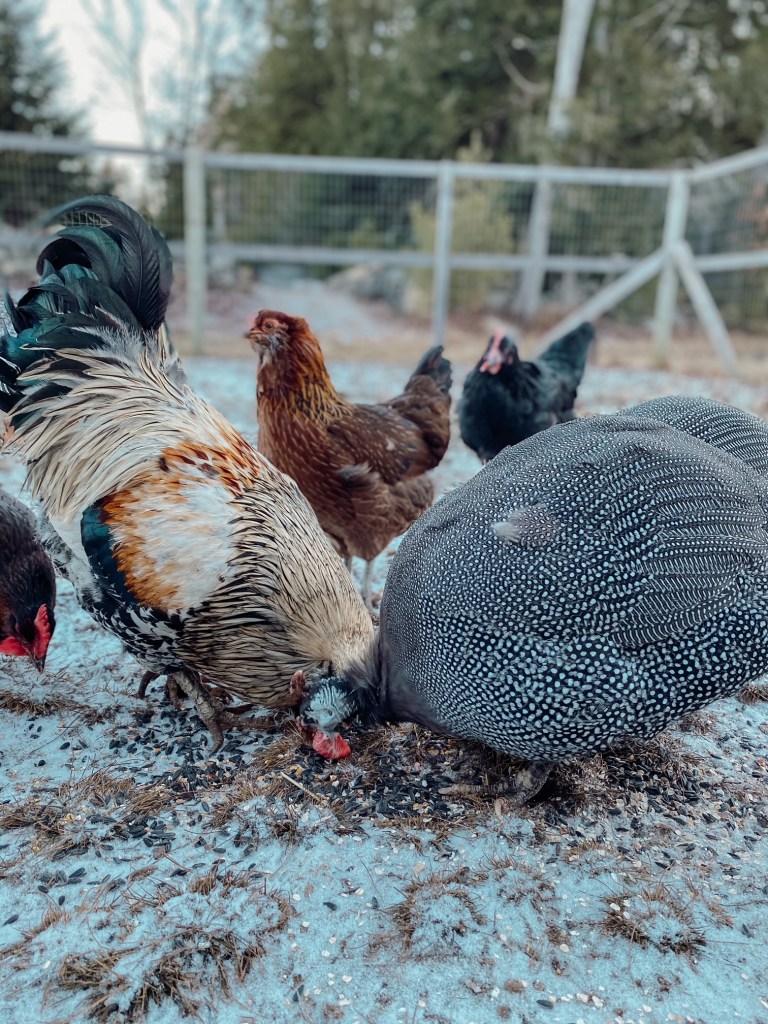
These interesting birds can be a great benefit to the homestead. They can do the bug-eating job of a duck, and a watchdog job of a goose, yet can easily live in harmony and in the same coop with the chickens. If you don’t have very close neighbors, adding guineas to your flock might also be a great choice for your farm or homestead.
 blackberryhillhomestead.com
One response to “Adding Guinea Fowl to the Flock”
Love the pics! I’d add to the benefit column their beautiful plumage. Well done article, thanks!
LikeLike