
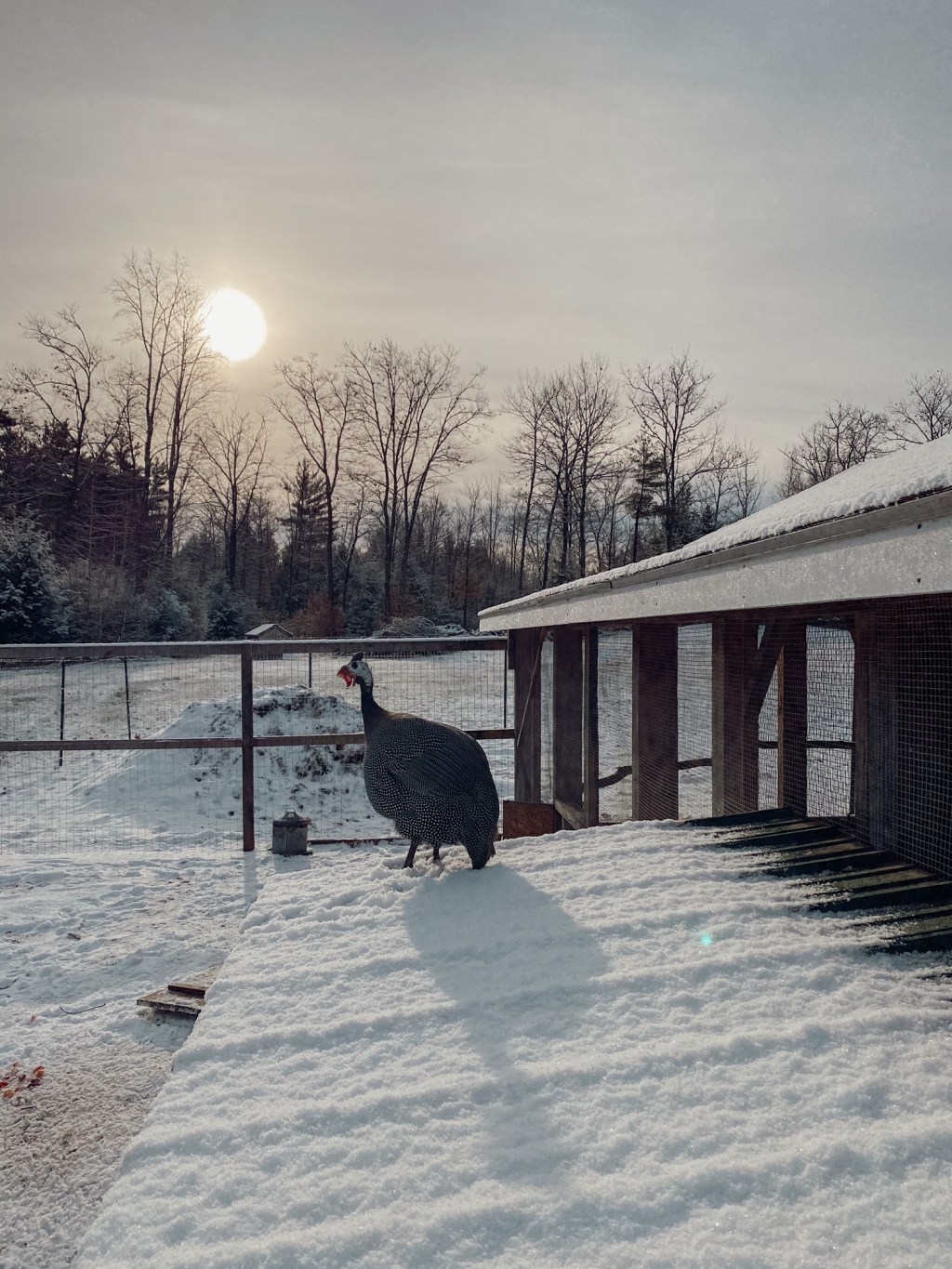
Its mid-January and we’re in full swing of winter over here in New Hampshire. Winter can be down-time for some, but it usually really isn’t around here. We’ve lived here nearly ten years, and every winter there are things to maintain, and to learn how to better manage. From the long driveway, to caring for the animals, and keeping the wood boiler filled, we’ve learned things along the way after making mistakes and figuring out how to better manage the challenges of winter.


We’re on 40 acres surrounded by woods, and about 1200 feet from the road. That’s a long driveway to maintain. Over the past nearly ten winters of being here, we’ve figured out the best system for keeping the driveway clear and not a complete mess throughout the winter.

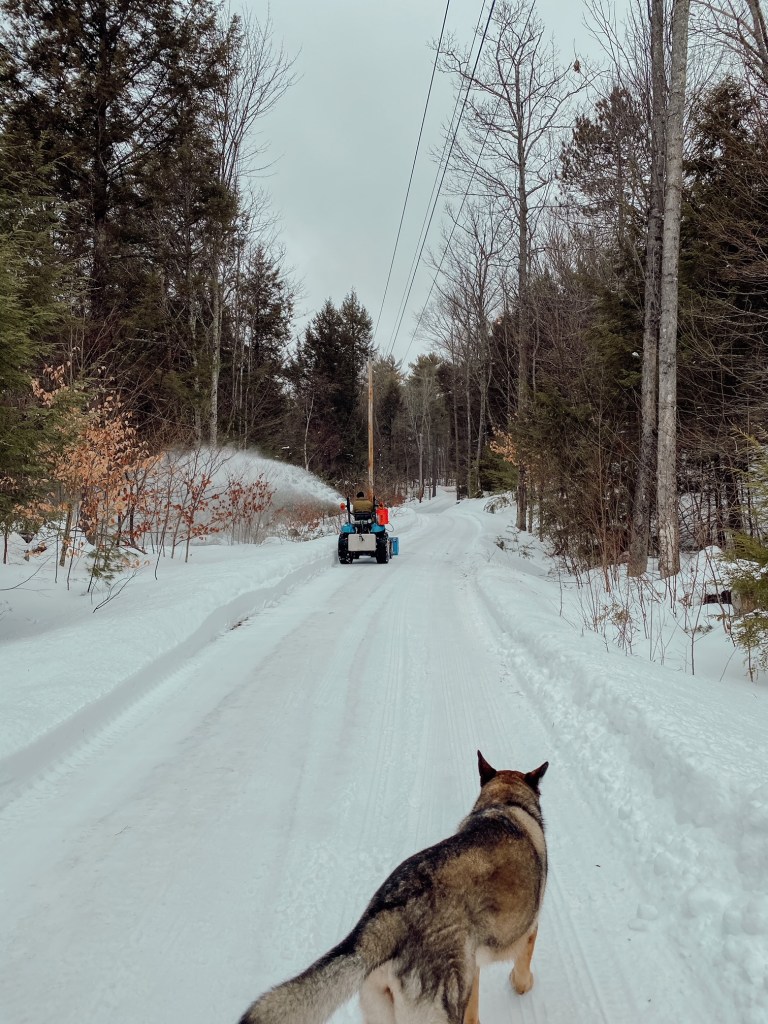
We have a trusty old yard truck (best investment) with a plow (that currently needs maintenance), and a snowblower attachment on the tractor (also worth the investment). With three little kids and a husband whose job keeps him busy during bad weather, it can be tricky keeping up with clearing the driveway, but he gets it done.
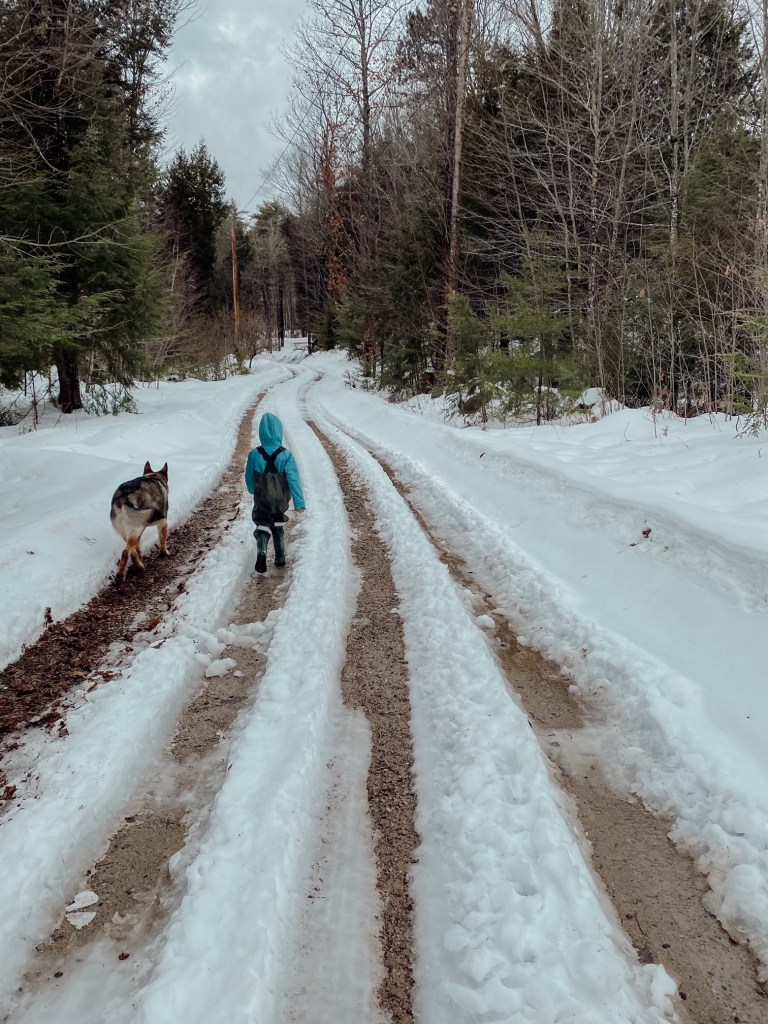
Freezing temperatures and having a good icy base on the driveway is best case scenario. It has not gone as planned so far this year, with the freezing, thawing, and January rain we’ve gotten. But we can come and go from the house as necessary, and spring will come soon enough.
After every storm, the pathways also need to be cleared to the chicken coop, the pigs, and the wood boiler. The tractor’s snowblower makes this a simple job.

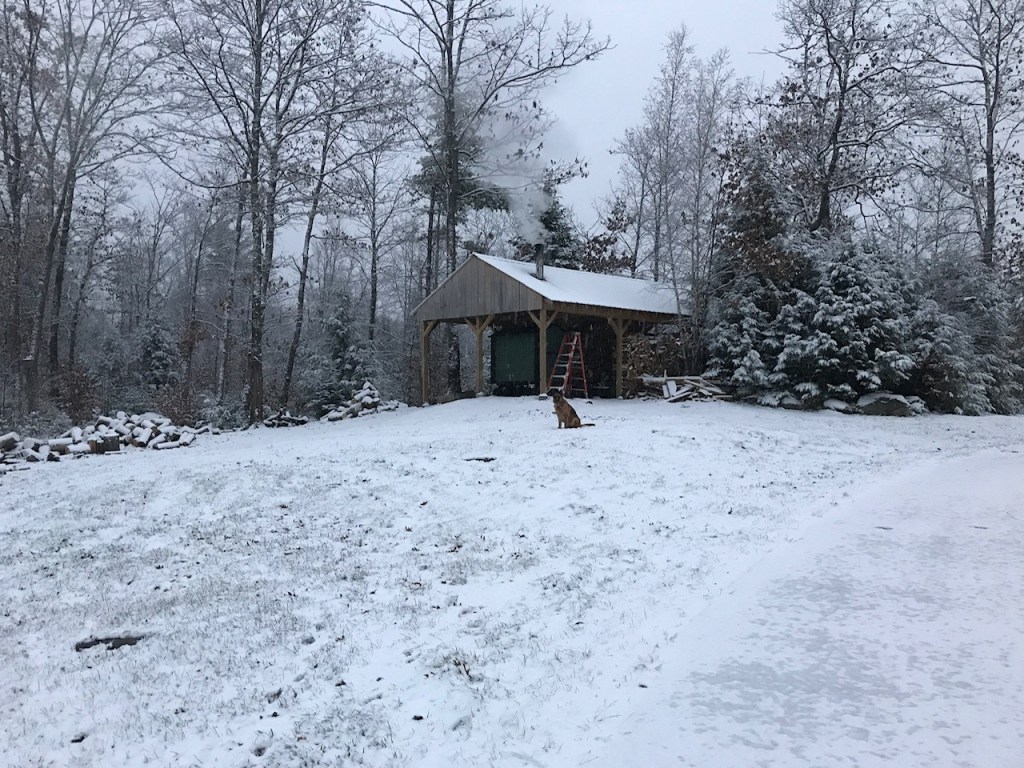
A daily chore, a year-round project, and in a way, a luxury, is our outdoor wood boiler. Although we only run the boiler from September/October through May each year, there is always wood to be cut and split. Luckily, my husband enjoys bucking up wood and hauling some downed trees from the woods. I mention this is a luxury, because burning wood for heat and hot water is a lot less expensive than burning fuel, so we’re able to keep the house toasty warm.


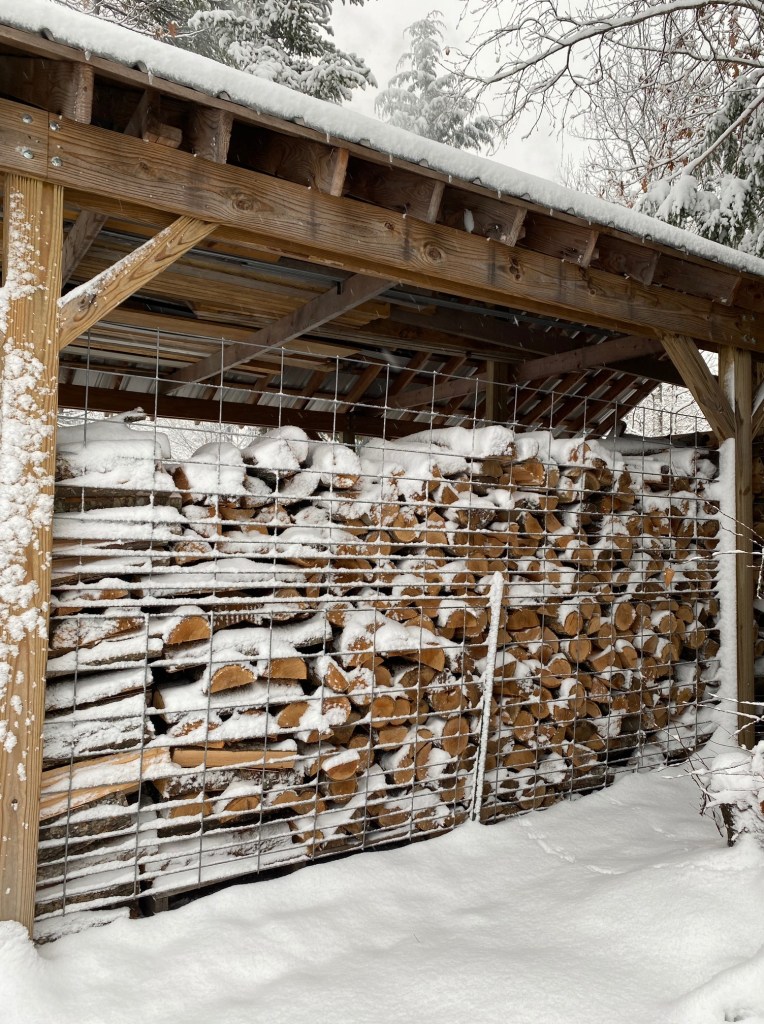
In order to make the daily chore of loading the boiler an easy one, my husband built a cover over the boiler and a large area for the firewood. After not having this woodshed the first winter we were here and digging out the firewood everyday under the snow and ice, we realized this was an important addition to the property. This keeps the rain and most of the snow off the wood, keeps a cover over our heads during bad weather, and holds lights that are super helpful during the dark evenings.


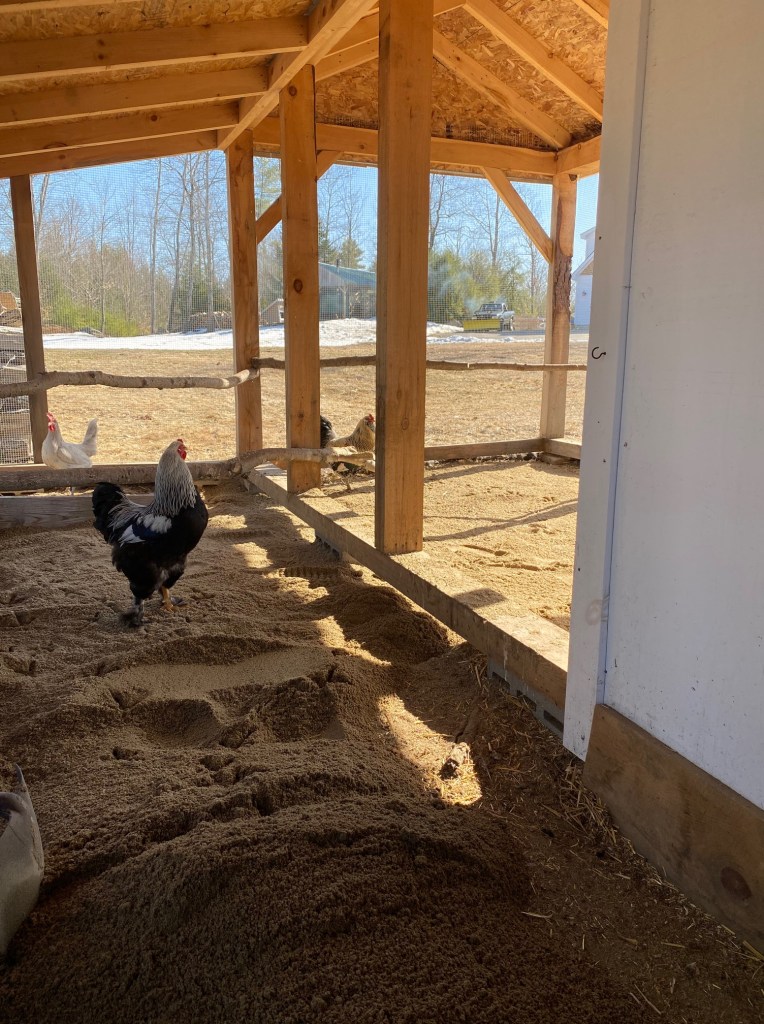
After years of having chickens, we’ve also figured out some tricks to keep them happy during the winter. Check out my post here about preparing the coop for winter. Adding plastic to the run, a heater for the waterer, deep litter with lots of straw, and lots of scratch and herbs can make a big difference.


We also had winter in mind when building the coop back in 2020. We built it on the highest spot on the yard, added A LOT of sand to keep the run high and dry, and added a storage space in the coop.

Having animals in the winter can bring a host of issues, including freezing water, potential health issues, and wet ground. This is our first year keeping pigs over winter, and we’re learning as we go. This winter has been warmer than most (which is kind of nice, in my opinion), but it also means a softer, wetter, ground, which has been a bit of an issue with the pigs. Although we placed the pig pen and house next to the chickens for our convenience, and in an area higher than the sloped area behind it, water from this wetter than normal winter has found its way to the pig area.
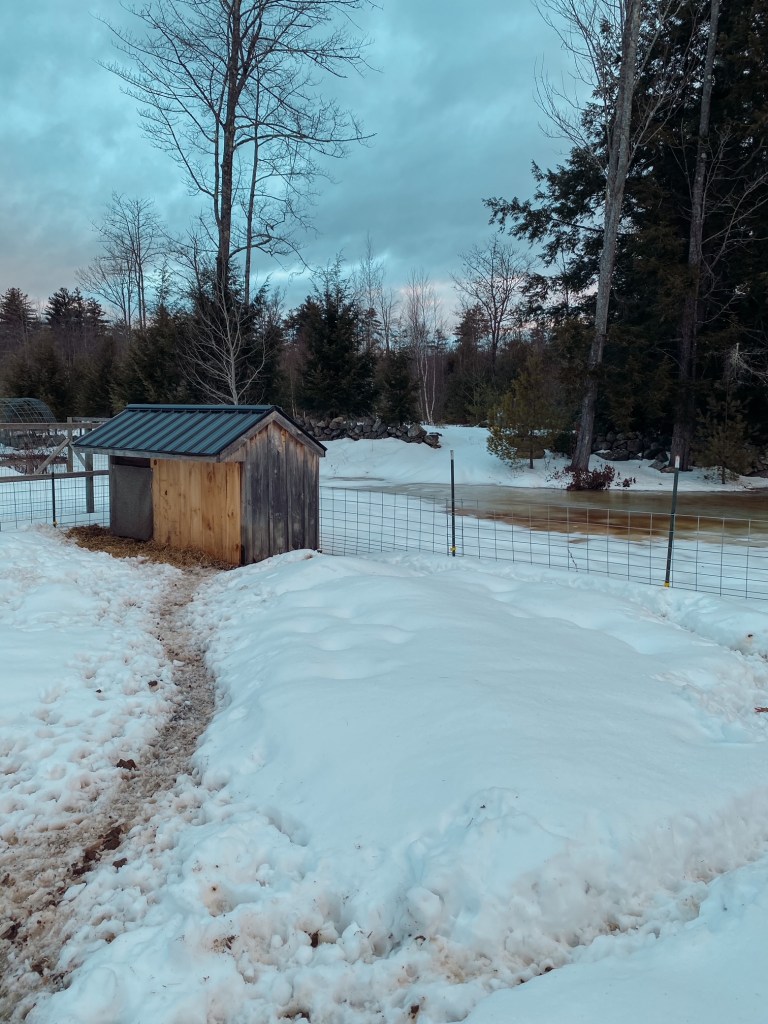
We’ve added loads of wood chips to the run a few times, and we’ve changed the straw bedding in the pig house more than expected. Because of this, we needed to get the pigs further off the ground. With the snow, now is not the time to move their pen. So to fix this now, we added pallets covered with plywood in the house. I filled in the cracks and edges with wood pellets, and covered the area in thick straw. I’m hoping this solves the issue of wet straw for the rest of the winter.
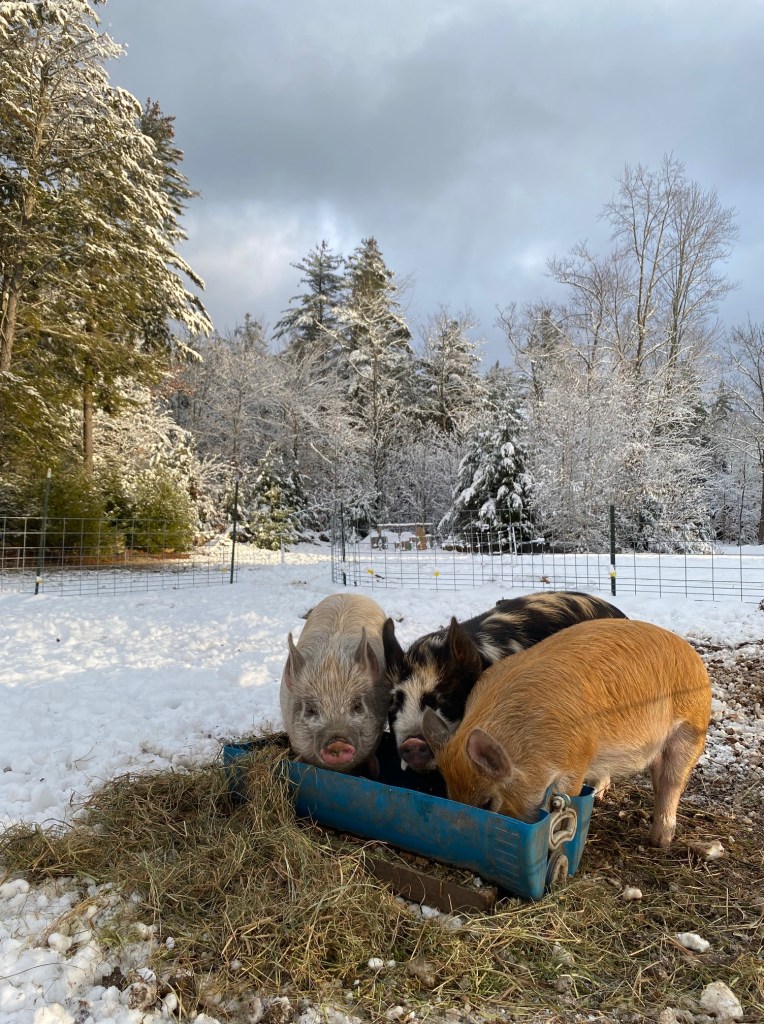
In the spring, the pigs will be moved to their large wooded area behind the wood boiler. But for now until the snow is gone, they will remain where they are. Going forward, we’ll have to figure out a better spot to set up the pigs for their winter home.
Winter can be a season of lesson learned, and this also applies to tasks inside. This is our first winter homeschooling, and we’re learning how to balance book work and inside activities while still getting sufficient outside time. While the kids are still young, and range in age from 1 to 6, there will be ongoing adjustments in school schedules as they get older.
During the winter is also when we enjoy the canned and frozen foods saved from the garden, our annual apple haul, and our home raised and locally raised meats. It’s a good opportunity to see what we use most of, what we don’t really care for or eat as much of, and what we wished we had more of. This helps us better plan for this upcoming year:
What will we grow in the garden? How many chickens will we raise? How many pigs should we have butchered? How many lambs should we reserve? Is there something else we should try out this year?
Winter can be absolutely beautiful here in central New Hampshire. But at the same time, I’m usually counting down the days until spring. It’s nice that our older kids are now actually enjoying the snow, but with the freezing temperatures, the headaches of dealing with the weather, and still having a younger child to carry around, April often can’t come soon enough.
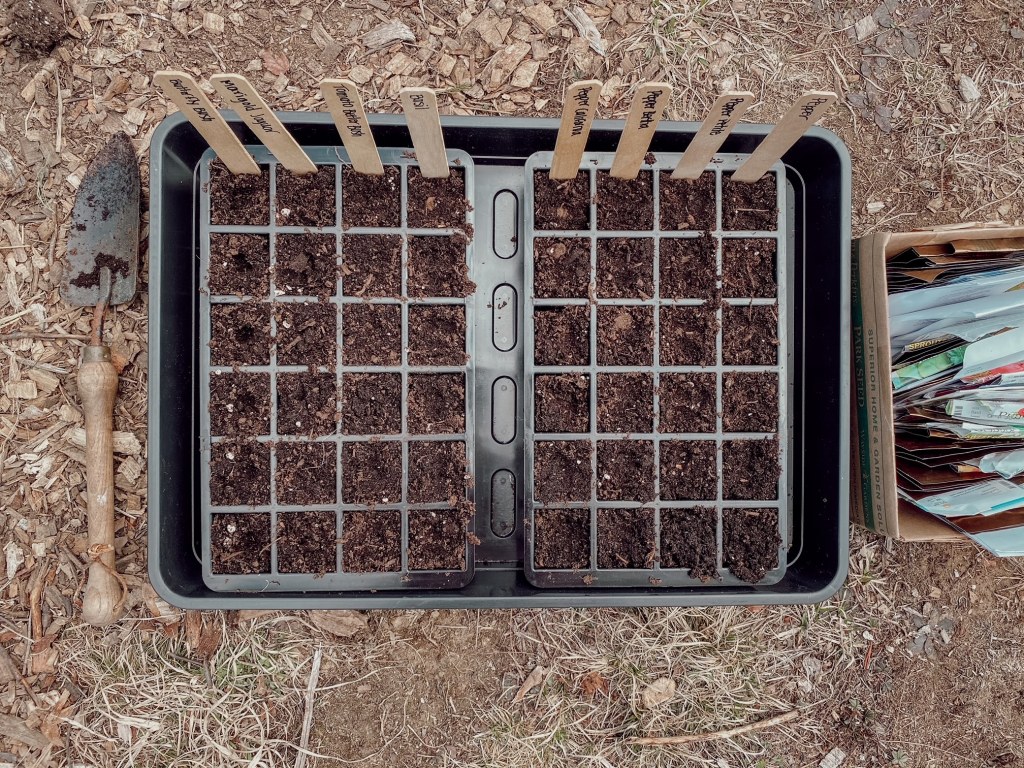
With spring on my mind, it’s time to organize all the seeds I have left from last year, order seeds for next year, and plan ahead for other projects coming up…
Finish the garden fence
Build a second chicken tractor
Plan out changes to the chicken coop
Figure out future pig pens and moveable housing (2-3 will be needed)
Build one more raised bed and one hügelkultur bed

The list usually never gets shorter, as new projects are added. As I write this, its forecasted that more snow is coming tonight. I’ll enjoy taking pictures of its beauty, but I’ll also be excited when it melts. When this cold season of learning comes to an end, a new season of learning will begin. A season for starting seeds, planning a garden, and preparing for chicks.
 blackberryhillhomestead.com