

It seems like more and more people are starting to raise their own animals for meat. Raising chickens or other poultry is a great way to start, especially for those who already have experience keeping chickens for eggs, and now is a great time to plan out your Spring/Summer chicks. Check out a catalog, your local feed store, or hatchery websites to see what chicks will be available in your area this season.
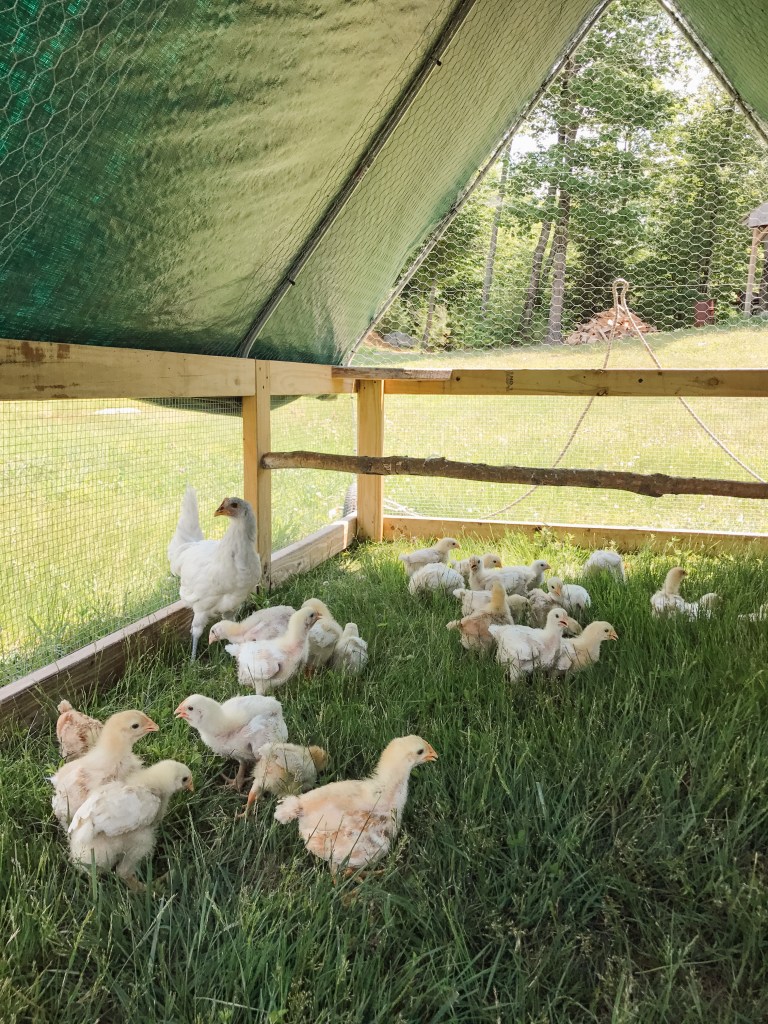
We started raising chickens for meat in 2018 and have tried out a couple different breeds since then, and I would love to share our experience to perhaps help you choose what breed would be right for your family.
Yes – there are many more options than just the fast-growing Cornish Cross!
With all these options out there, what’s the difference?
Choosing the right breed for your homestead or farm will depend on several factors. What is most important to you? A fast-growing bird, foraging ability, or perhaps a dual-purpose and heritage breed that can also lay eggs and reproduce to then give you more birds to raise for meat the next year?
We purchase our chicks from Murray McMurray hatchery and have had good success rates. Rare breeds are already getting sold out for certain weeks of the year, so think about your goals and what factors are most important in the breed that you choose!
Check out Murray McMurray’s chick selection for this year: Murray McMurray Hatchery – Hatching the Highest Quality Baby Chicks and Poultry

Here are the breeds of meat birds that we have raised:
CORNISH CROSS
Perhaps the most well-known meat bird is the Cornish Cross. There are several different types, but they are typically a cross between a Cornish chicken and a White/Plymouth Rock chicken. Again, these are hybrids, bred for rapid meat growth. They are unlikely to naturally reproduce.
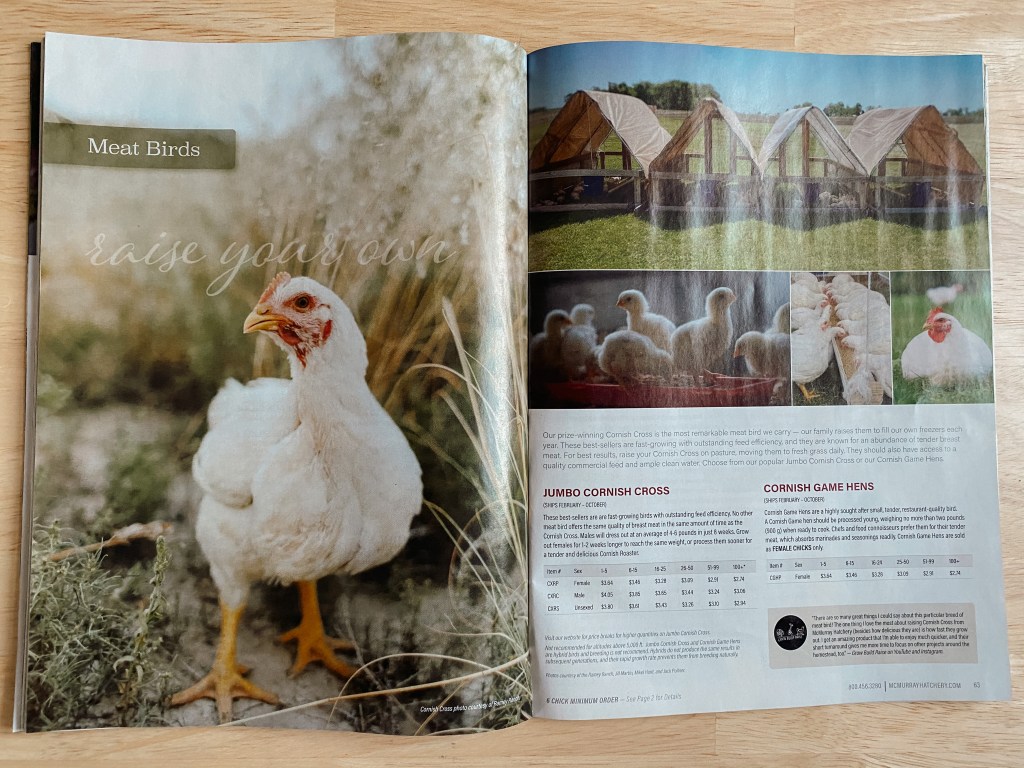
The first year we raised chickens for meat, we raised Cornish Cross. These birds grow out for 8-9 weeks then must be processed at that time. Otherwise, there is a good chance they will start passing from heart and leg issues. Many people choose this breed because they grow FAST! So why choose something different?
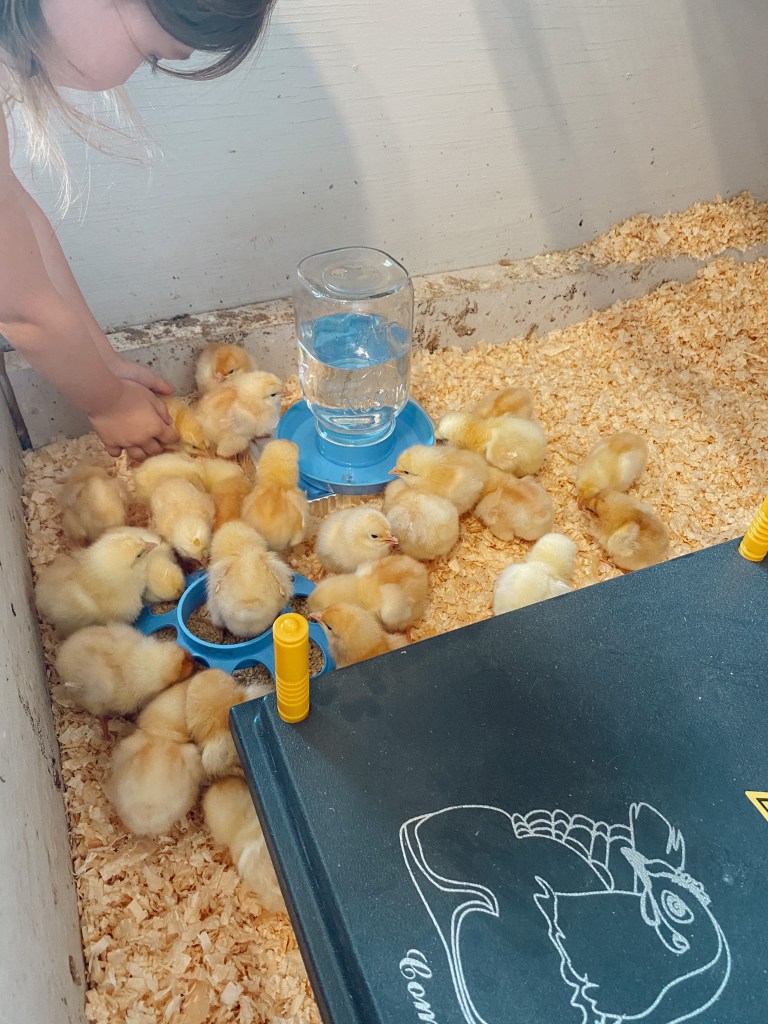
Well, we didn’t care for this breed. They grow TOO fast. They eat a lot which means they poop a lot, which means the area that they’re in starts to smell very fast. Even keeping them in a mobile chicken coop/tractor and moving it twice a day is not enough to keep their living quarters sanitary, in my opinion. Given the option to free range on the grass, these birds were not as mobile as other breeds and chose to just stay by their food and water.
But, these might be the right breed for you. If a fast grow out time and ample breast meat is your main goal, then you might consider the Cornish Cross.
Going forward, we wanted to try something more natural. Even if it took an extra couple of weeks of growing time, we wanted our chickens to have a happier existence (it’s not always about efficiency, right?).
DELAWARES
The second year we raised chickens for meat, we got Delawares. Delawares are a dual-purpose bird. We let them free range during the day and they were happy to do so. They took a lot longer to grow out and still ended up smaller than the Cornish Cross birds, as expected.
We raised standard Delaware birds, but McMurray now has “enhanced” broiler specific Delawares found here.

Unfortunately, the meat was quite tough. If we tried them again, we could try brining the meat in ice salt water for a while after processing and before packaging for the freezer to see if that would help, but we won’t be doing this breed again, as we’ve found some other options we like better.
GINGER BROILERS
For a few years, we raised Ginger Broilers from McMurray Hatchery. We have been very happy with this breed. They are friendly and great foragers. In addition to the mobile chicken coop, they had access to free range in an electric fenced area, and they were active all day unless it was a very hot day.
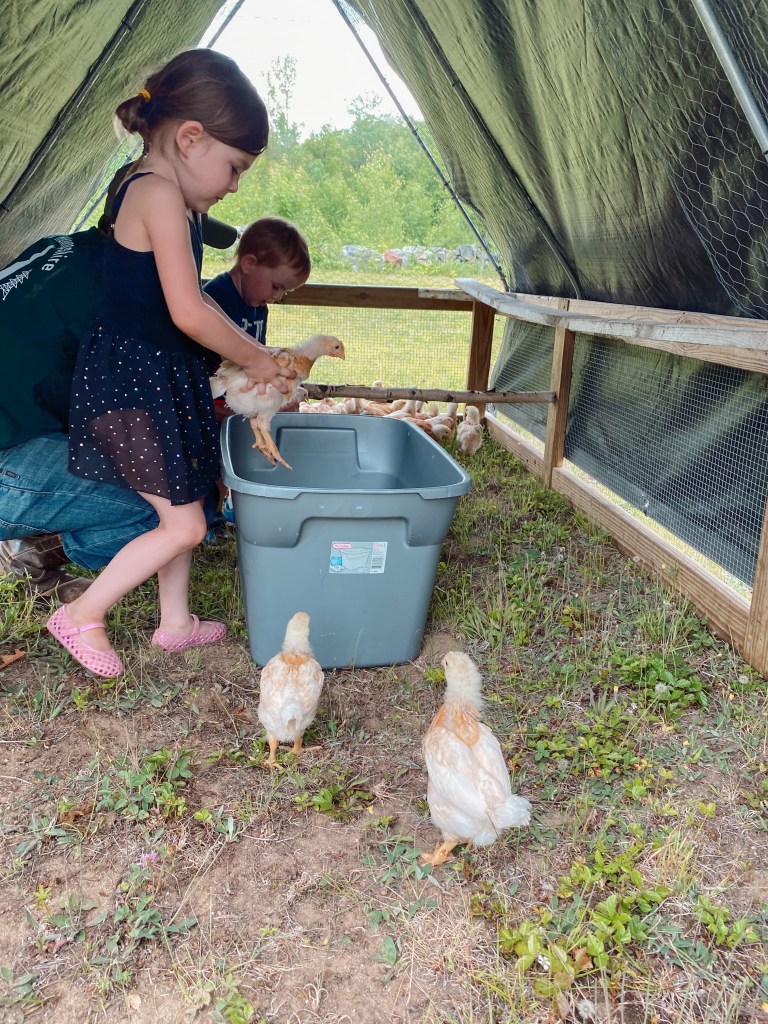
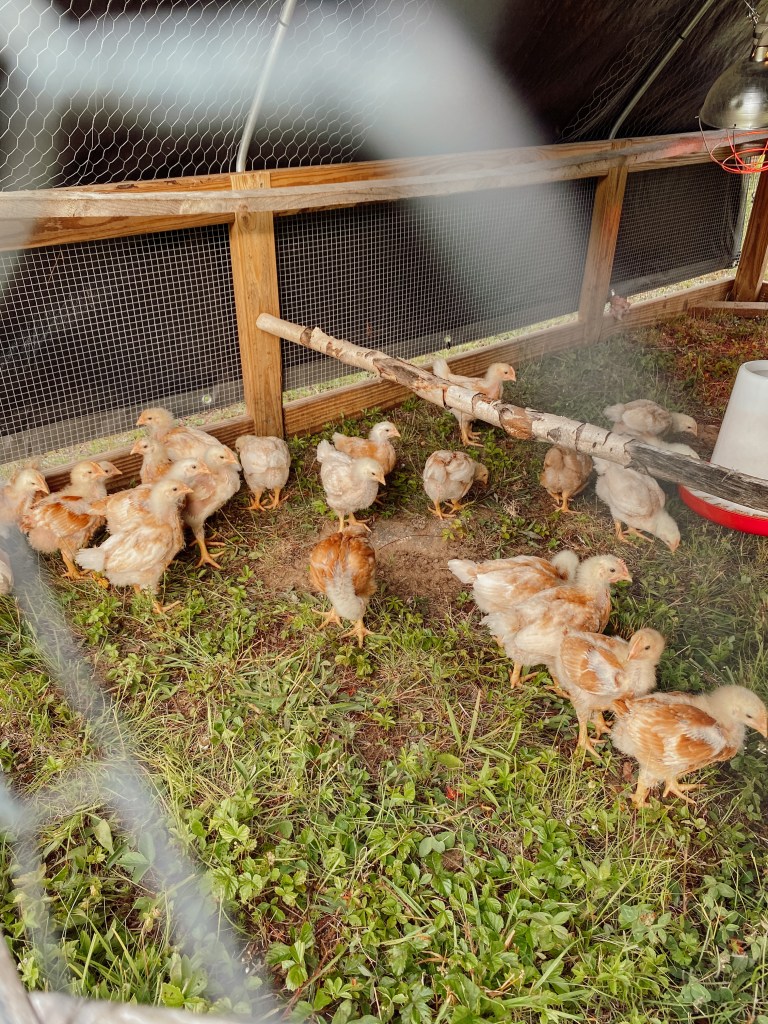
They grew out in 12-14 weeks, and unlike the unnatural Cornish Cross, they were not threatened with health problems if they grew out too long. We actually had one escape during processing and we just let her stay with our egg layers (she was on the smaller side, anyway). She lived another 2-3 years in our coop laying eggs.
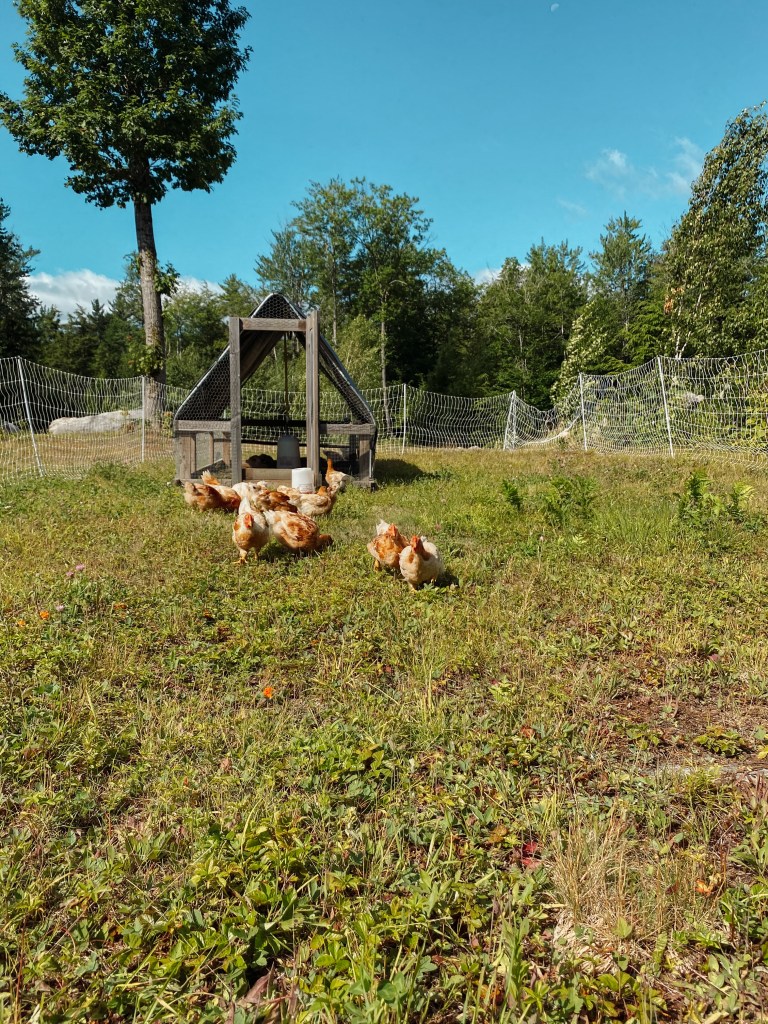

The Ginger Broilers are large birds, but still come out smaller than some other meat birds, with mature weights of 5.5-7.5 pounds. We have found that the size of the birds greatly vary from one to the next. However when processing, we did half the birds on one day, then gave the second half that were on the smaller side another two weeks or so to grow out before processing and this worked out well for us.
The Ginger Broilers are also hybrids. Although we have been happy with this breed, raising a heritage breed of chicken for their natural characteristics and sustainability would be a goal of ours down the road.
BIG RED BROILER
This year, we’ll be trying two breeds that we haven’t raised before. One is only available from McMurray Hatchery, Murray’s Big Red Broilers. We’re trying this breed mostly because the Ginger Broilers are not available/sold out for later this year.

This breed, however, looks like it will be a good fit for our needs. They are similar to the popular Red Ranger breed, grow out in about 12 weeks, are excellent pasture birds, have been known to have good meat, and grow out to 7-10 pounds which are larger than the Ginger Broilers.
BLACK JERSEY GIANTS
Another breed we’ll be trying this year are Black Jersey Giants. If we like this breed, we may keep a few to breed and hatch for next year’s meat birds. They take longer to grow out – as long as 20 weeks, but they’re a beautiful heritage breed that grow to 10-13 pounds. They are also great layers, making them dual-purpose birds.
We also ordered a few Bielefelders for egg production, but these dual-purpose birds are also becoming popular for meat production.
TURKEYS
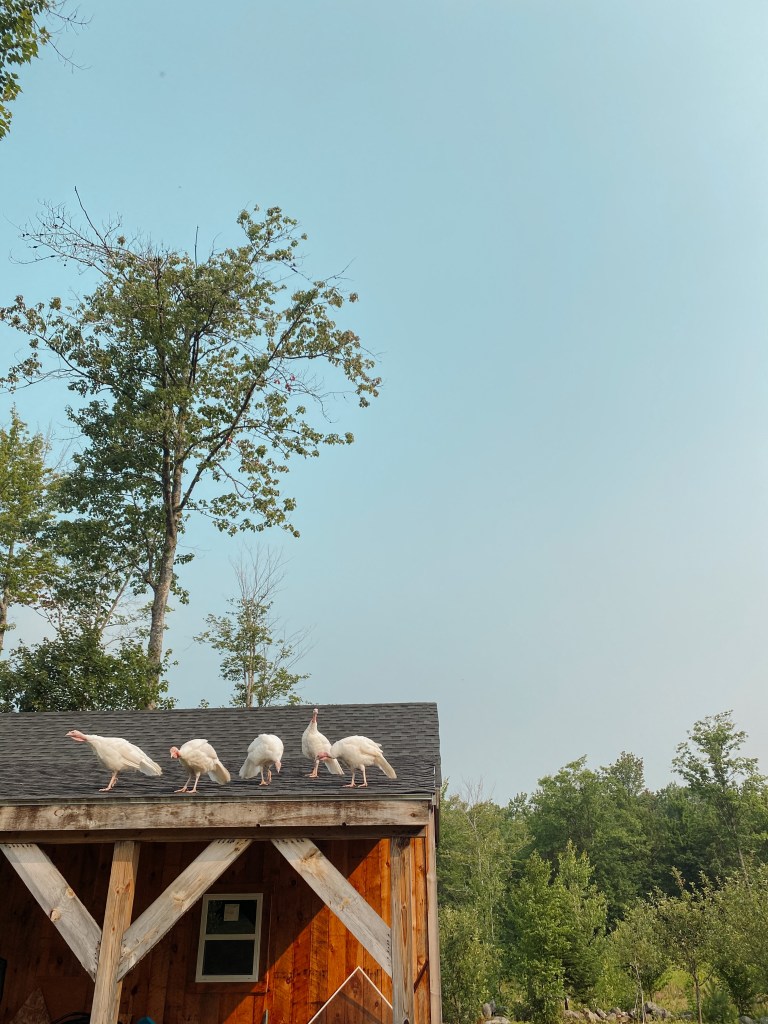
On a somewhat separate note, we have tried raising turkeys for meat as well. We raised 15 Midget Whites, and they were SO sweet! We really enjoyed having them. They followed you around like puppies making sweet little noises, and free ranged well. It was also fun to look out and see those proud Toms walking around.


However, they fly – high! They kept getting on the cars (NOT good). And because they were so social, they would come right up to the house, get on the deck and the hot tub, and just kind of be in the way…. So anyway, maybe if we try a heavier breed or clip their wings perhaps we’ll give it a try again. Please reach out to me if you have any helpful thoughts on this!
I’ll also be happy to update this summer how we like these new breeds of chicken. We’ve been raising chickens for years, but there is always more to learn, and new breeds to try out. On a separate post, I’d also love to share our set-ups for chicks and raising pasture meat birds, as we continue to change and tweak our set-ups, providing the best environment for raising happy chickens, and coming up with the simplest routines for upkeep.
I hope this post has excited you to raise your own healthy pasture-raised meat. It makes me happy knowing that the chicken in our freezers and on our table had a healthy and happy life, and knowing what they ate and what conditions they lived in. So – are you ready to try something new?
 blackberryhillhomestead.com