

So – why pigs? Why do we raise pigs, why are we raising pigs in the winter, and why choose a particular breed? Much thought and consideration goes into choosing animals to have on your homestead; especially animals that you plan to breed and eventually have in the freezer. We chose pigs for a number of reasons, and from all of the breeds around, we chose Idaho Pasture Pigs for several reasons as well.
We have raised pigs for meat twice before. In 2018, we raised American Guinea Hogs. American Guinea Hogs are a heritage breed of pig. Heritage breeds are traditional breeds that were around long before the commercialization of agriculture and are suited for particular environments. They are more disease resistant than modern breeds and often have better dispositions.
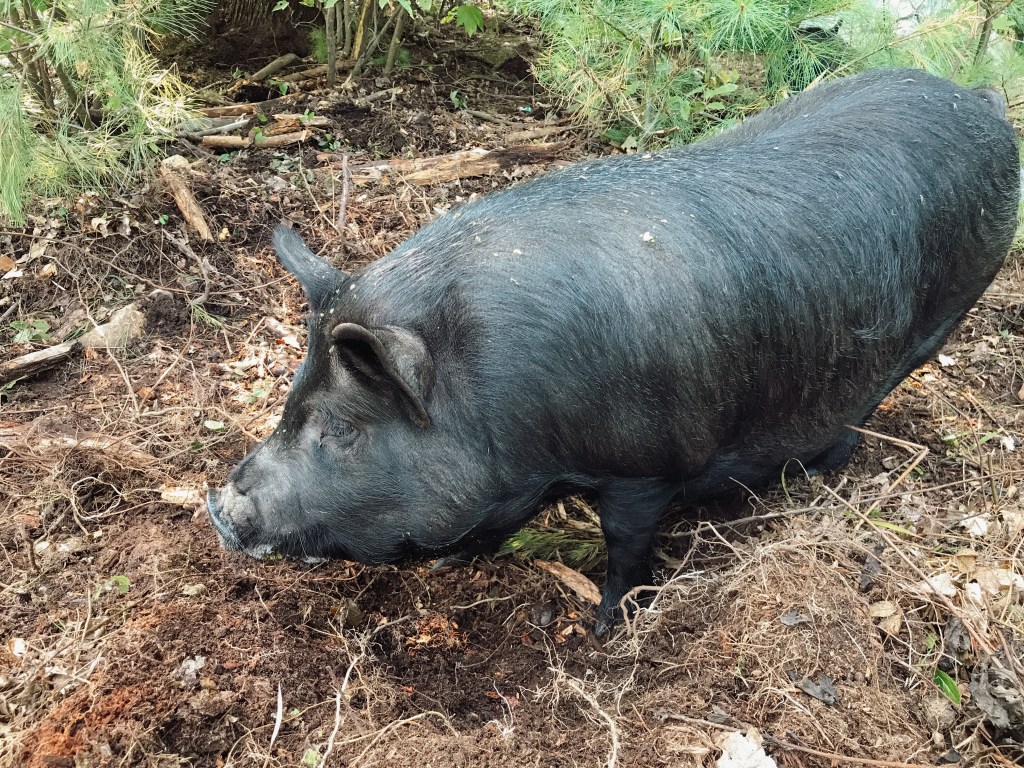
Guinea Hogs are a smaller hog breed that do well foraging. We wanted our first experience with pigs to be on a smaller scale with gentler pigs, and the guinea hogs were a good choice. They were slow growing, friendly, and good foragers. We even named them (Bricks, Sticks, and Straw. Ha!). We had them in a somewhat wooded area, with a hog panel pen, and an extra foraging area with electric netting. This worked well, and they did a good job at eating low shrubbery, things on the ground, and not rooting up the ground too much.

We enjoyed this breed, though butcher day was a sad one as they were friendly and pleasant to have around. The Guinea Hog meat also turned out to be much better than other locally raised pork we had previously tried. Because they are slower growing, and had grass and forage in addition to their grain feed, it leads to better tasting marbled meat.
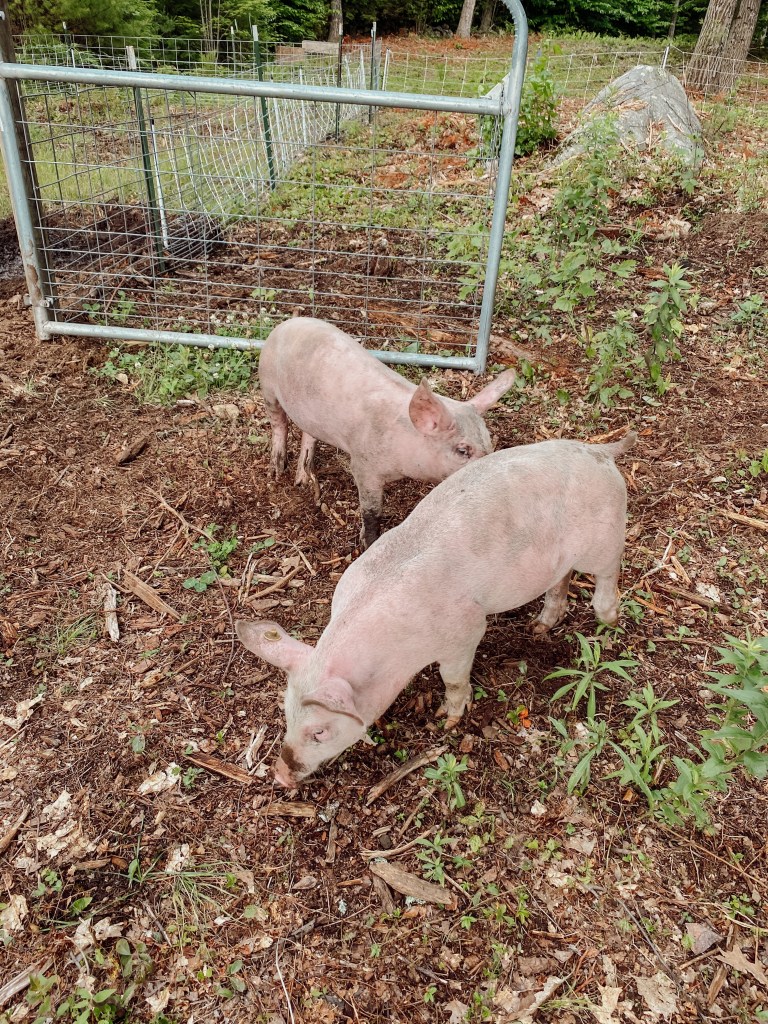
We raised pigs again in 2022. This time, we went with a traditional feeder cross breed. These pink pigs grew quickly, and they weren’t quite as friendly. We did this intentionally, thinking that butchering day would be easier as we wouldn’t become attached to the animals. I wouldn’t say they were aggressive, but they were big and pushy when they wanted their food. We had the same setup as the American Guinea Hogs, but even with a large area to graze, they hardly seemed interested in doing any kind of foraging.
So – what makes the Idaho Pasture Pig a good fit for us?
After thinking about it for years, we finally picked up an IPP breeding pair this fall. They have the size, temperament, and grazing ability that makes them a great choice for a small family homestead. Although we’ve never raised pigs in the winter (only throughout a summer/fall season from piglet to butcher date), I’ve read the many positives of raising pigs in the winter (like less smell, less mess, less mud, less flies, and the need for much less water). We also need to keep pigs year-round if we plan on breeding.

Idaho Pasture Pigs are a new breed of pig, and have only been available since 2012. They were developed in Idaho, with the intention of creating a pig breed that had a friendly disposition and great grazing abilities, but who also grew bigger than the popular pasture breed, the Kunekune pig.
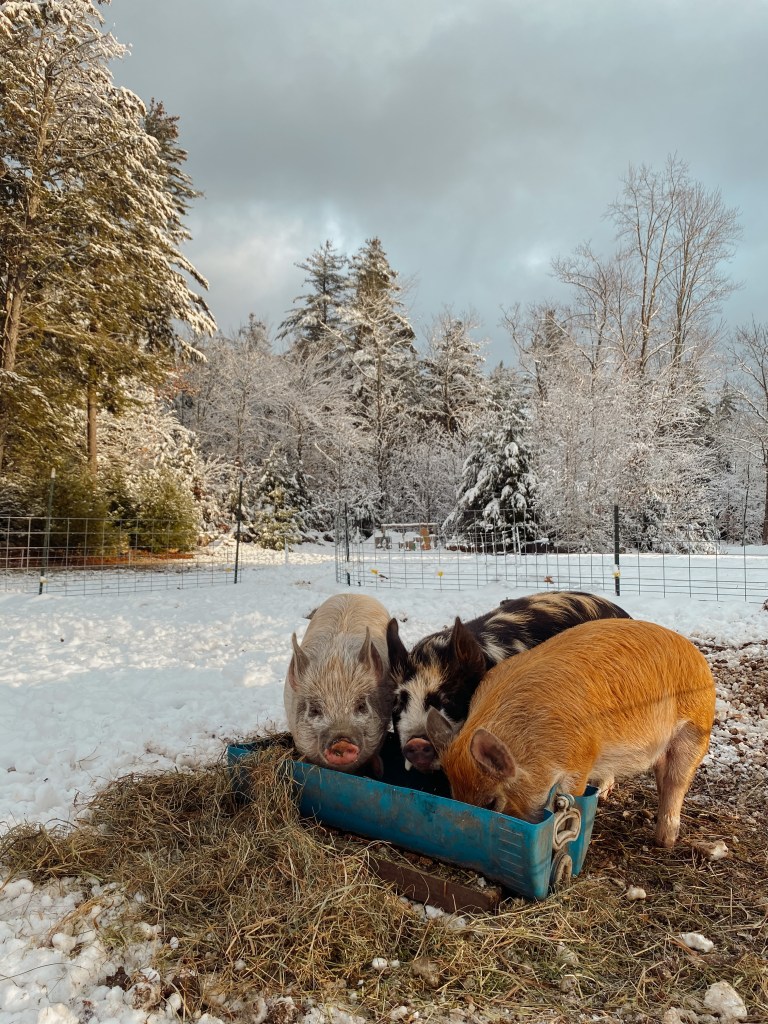
Meet our IPP Trio:
Our Tri-colored Boar “Billy”

Our Ginger Gilt “Mabel”
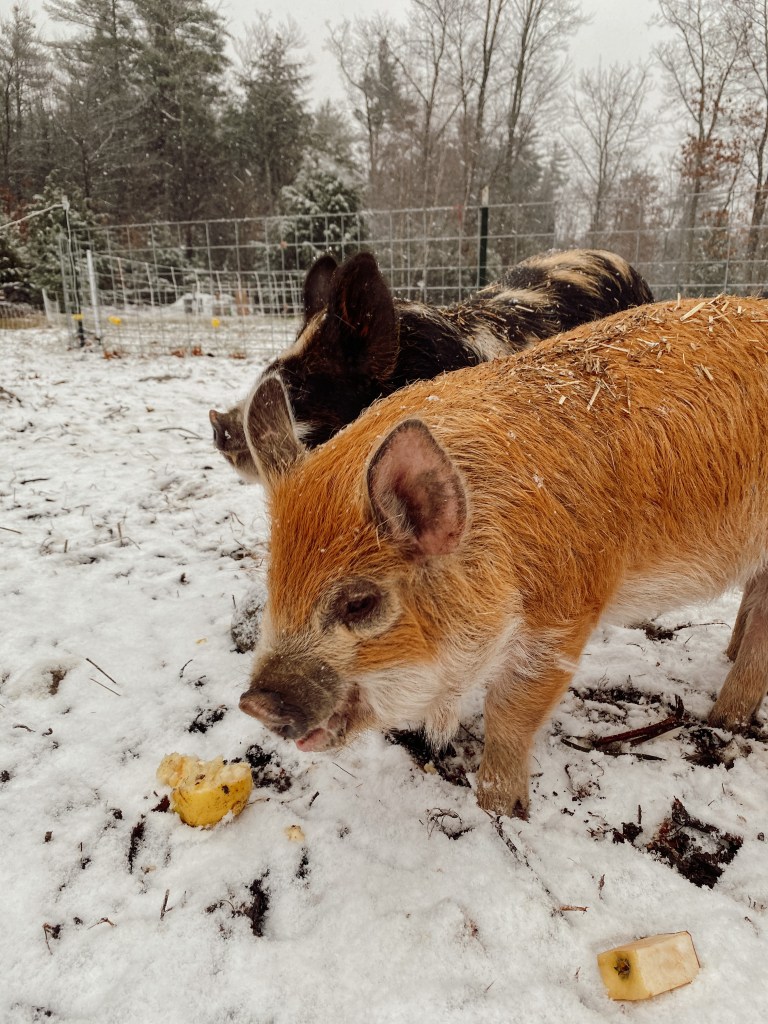
Our Feeder “Butters”

Although we will only have Butters for the 10 months or so that it will take to get to full weight, he will enjoy the same quality of life as our breeding pair and also keep them company.
Feeding
Their upturned snouts discourage them from rooting, encouraging them to graze. Because of their mineral needs, they can’t live solely on grass, but in the summer, we should see roughly a 50% reduction in feed costs depending on our pasture. Some IPP’s can grow and thrive on 80-90% pasture, though I don’t think we’ll have fertile enough fields for that ratio. However, we do have the acreage to rotationaly graze a small group of pigs, so we’re hopeful that we can create better pasture land over time.
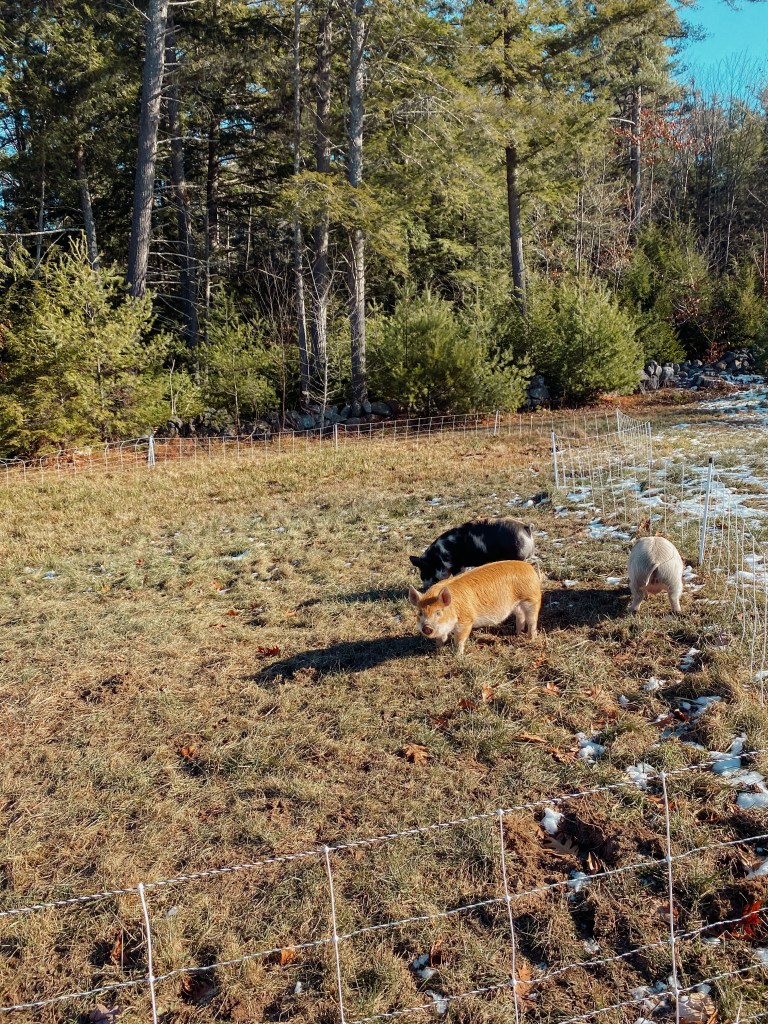
IPP’s are also sensitive to salt and need particular minerals to thrive. Otherwise, they might start rooting. Testing your soil is the best way to figure out what minerals are naturally occurring on your property (and thus, what they will be getting from the grasses). Whatever minerals are lacking in the pasture can be made up with supplements. This is something we’re still learning and trying to figure out for ourselves, having only just gotten our pigs a few months ago.
If we’re able to get these pigs to get much of their diet from the land rather than grains, it will not only save us money in feed costs, but the meat will also be considerably better. As the weather is getting colder here in New Hampshire and we’re starting to see some snow, we’re also giving our pigs hay and alfalfa now that grazing will soon become impossible until the Spring.
Size
IPP’s are smaller than commercially grown pigs, reaching maturity at 250-450 pounds. Though still big animals, a friendly IPP is much less intimidating than a full sized potentially aggressive commercial feeder pig.


Farrowing
I have seen IPP litters be as small as 2 and as many as 14 piglets. Because of our young breeding pair, we won’t be seeing our first piglets here until probably next August or September. Because of the friendly nature of these pigs, we should also have an easier time being able to be close by should the sow or a piglet need any assistance.

We’re planning to have two litters a year, keeping a feeder for ourselves and selling the rest to other local farms. We enjoy raising pigs as they are easier to raise, hardier, and less susceptible to disease than some other farm animals raised for meat.
We’re hoping that the Idaho Pasture Pig breed will continue to be a good fit for us, and also be suitable for other farms and families in our area looking to raise their own pork, or purchase pork raised by us. I think that we’ll also continue to see an increase in this breed given their personalities and meat quality. Be sure to reach out to your local farms and homesteads if you have any interest in purchasing quality pork to feed your family this year!
 blackberryhillhomestead.com